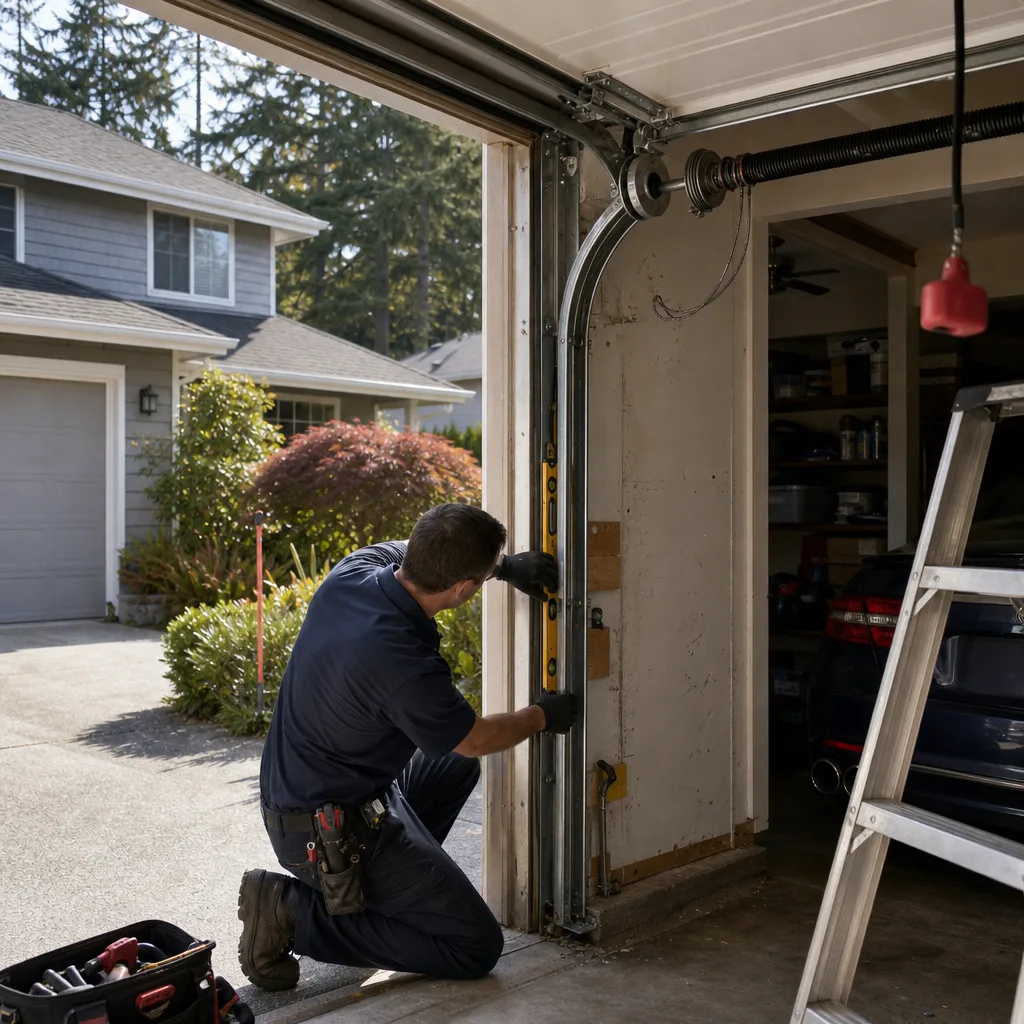
Last updated November 20, 2026
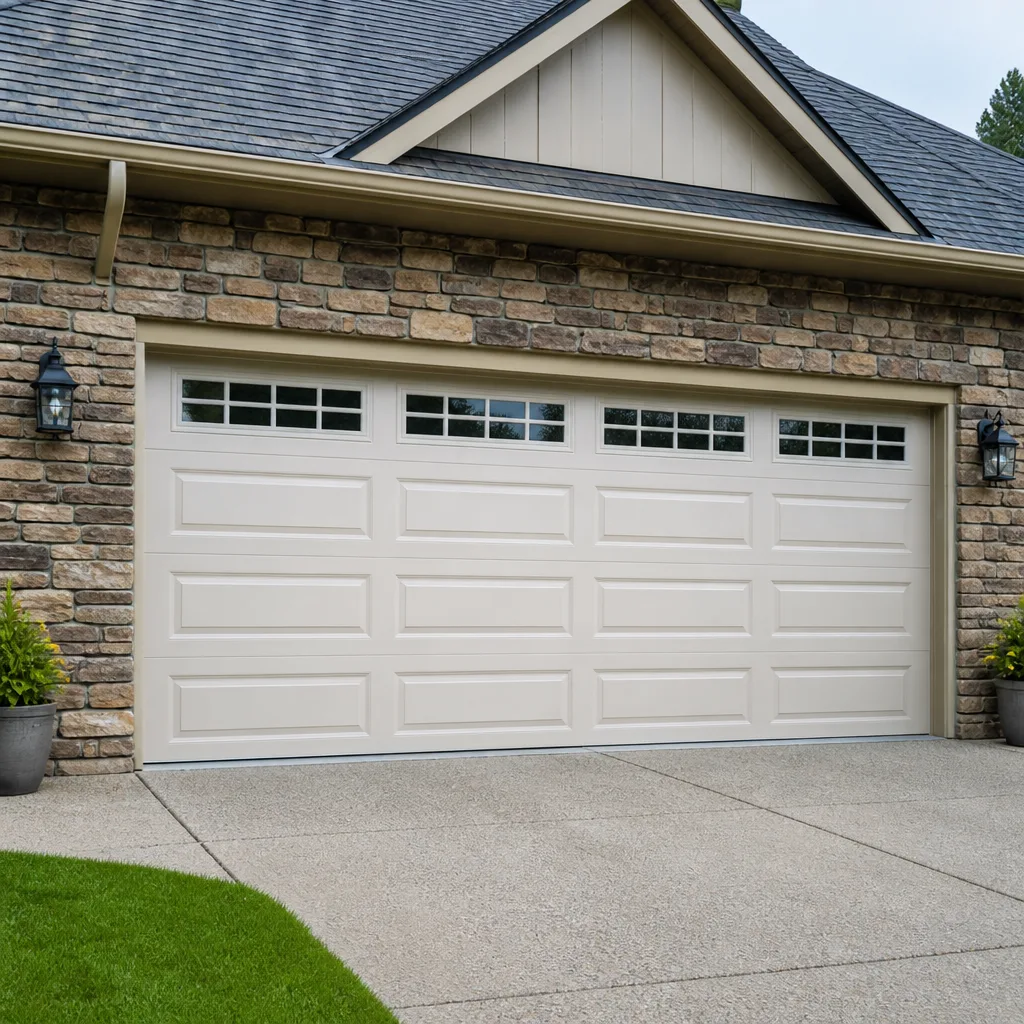 Raised-panel steel
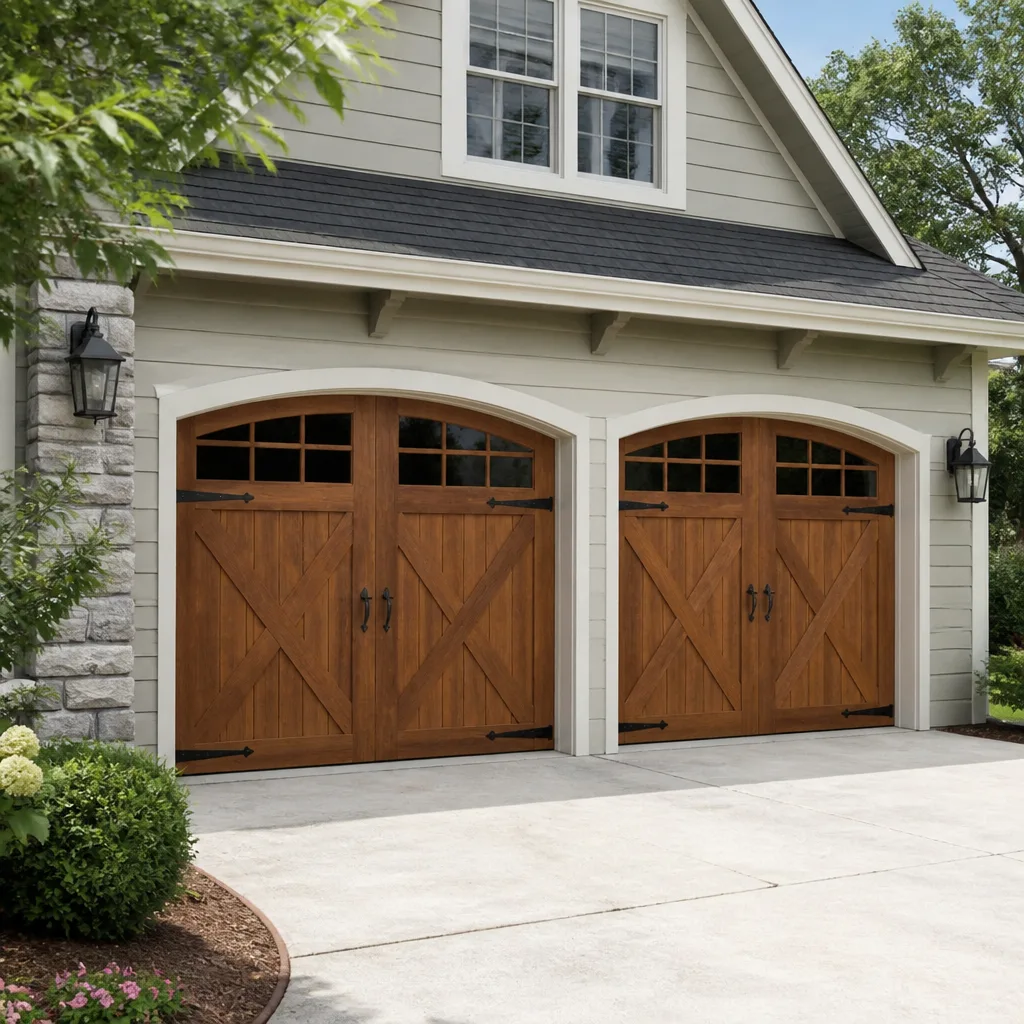 Carriage house
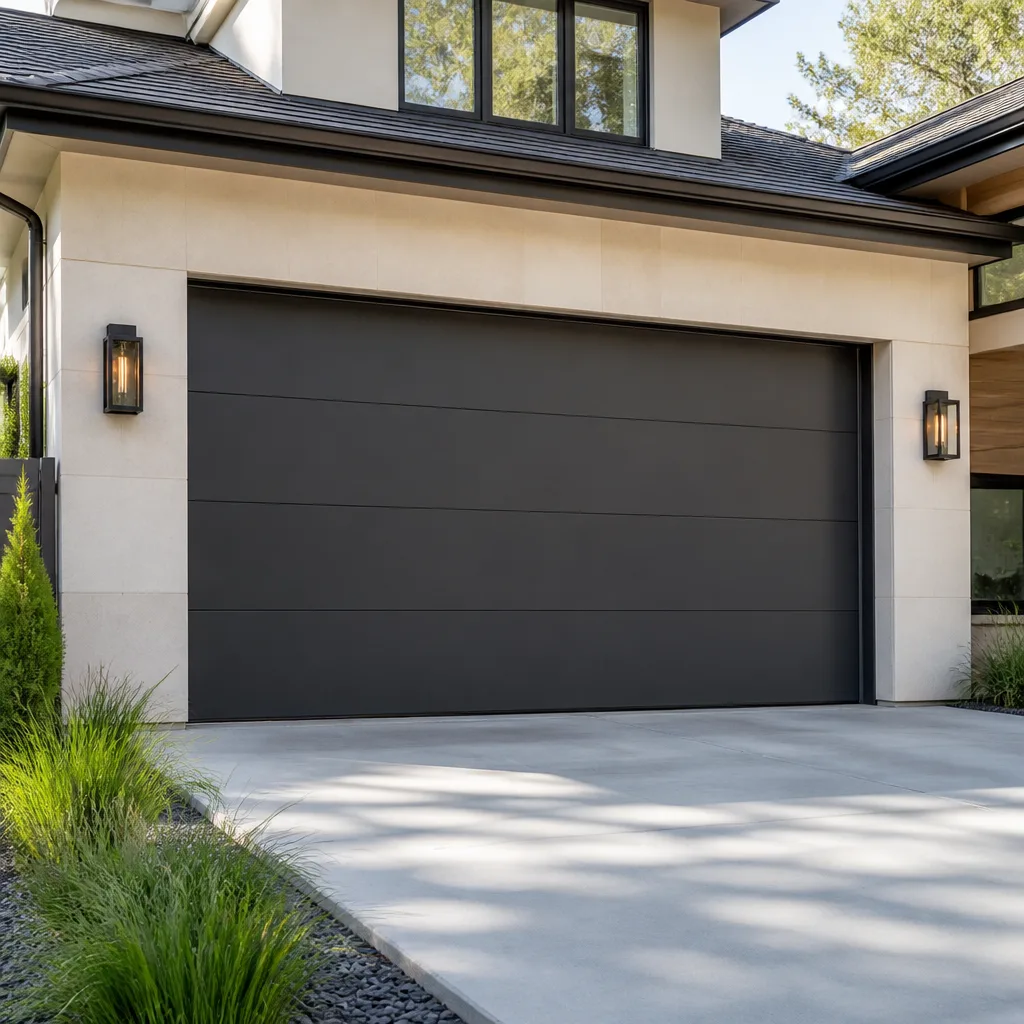 Modern flush
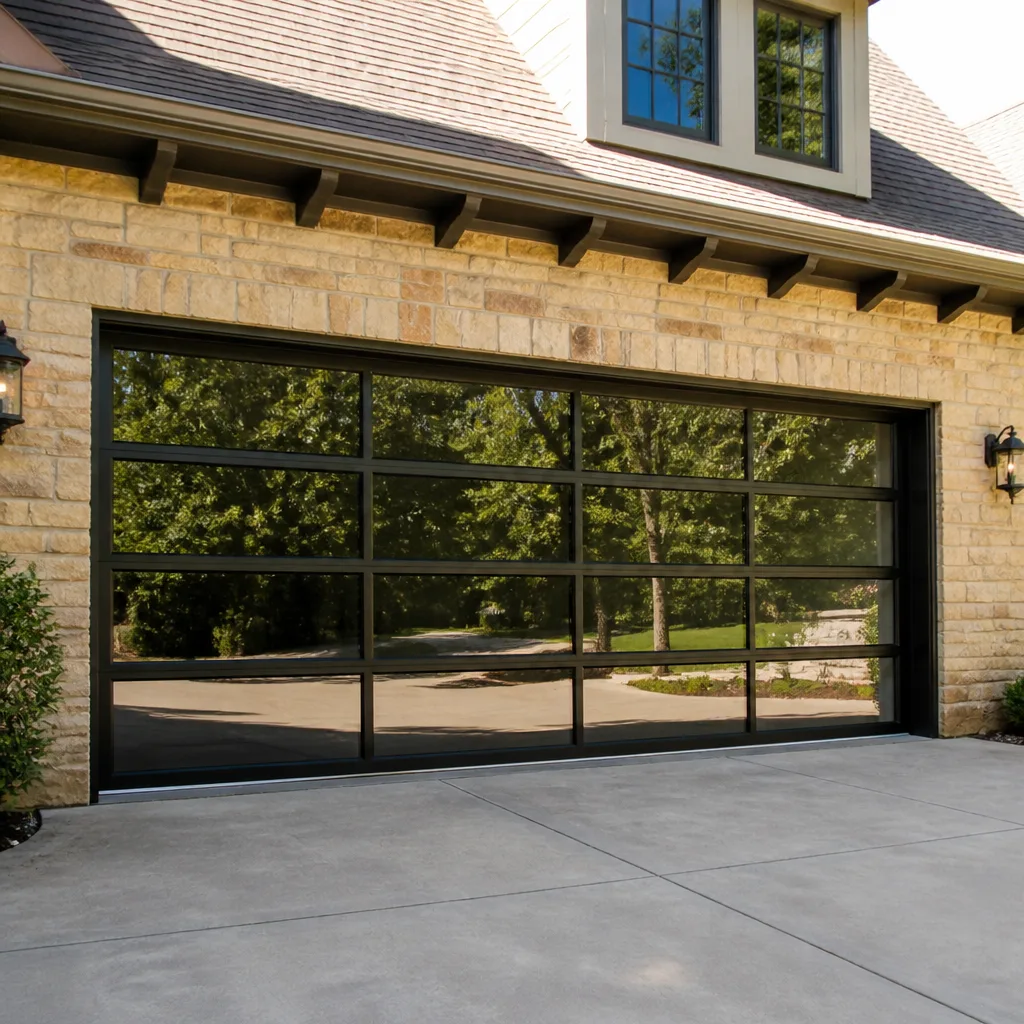 Full-view glass
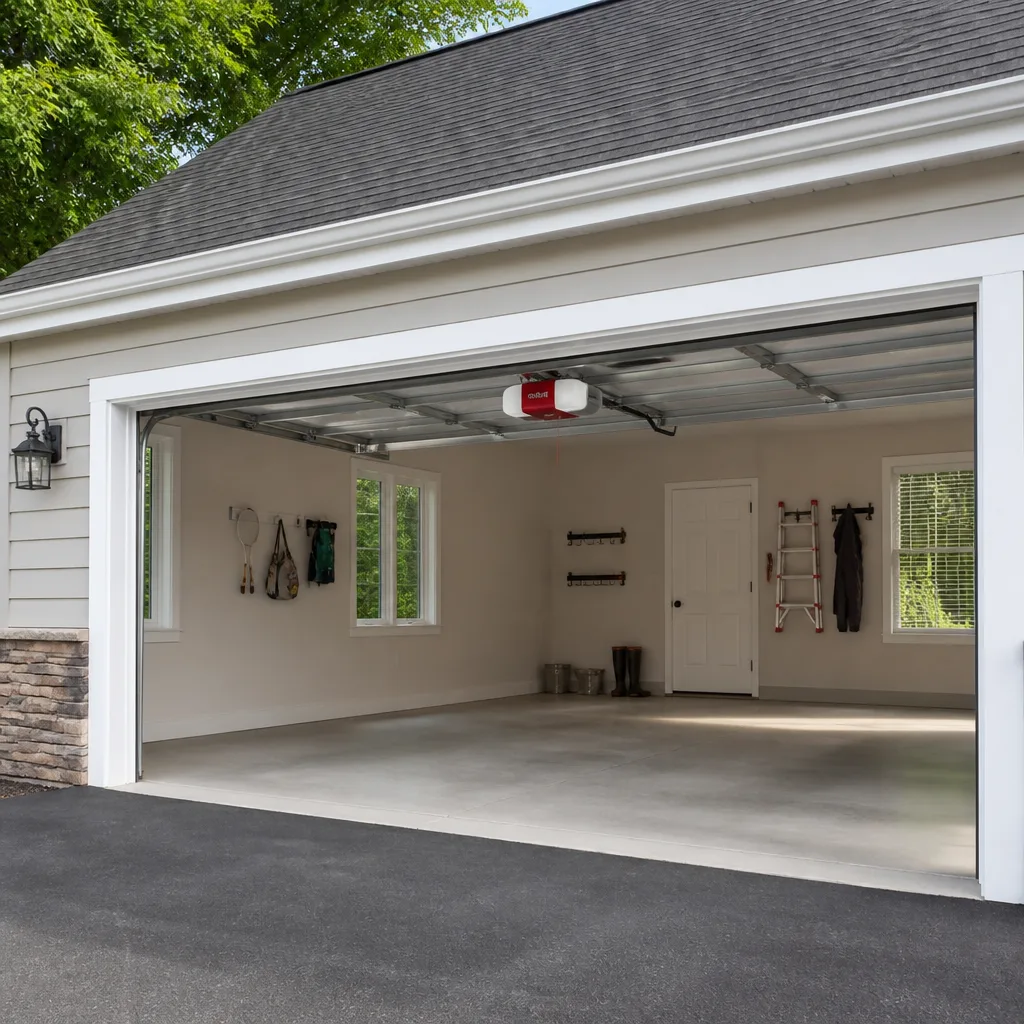 LiftMaster openers
 Chamberlain openers
Full 25-point door and opener safety check with every visit - springs, cables, rollers, tracks, and your LiftMaster or Chamberlain opener included
You get a price before we start. It does not change when the pro arrives.
Get your free estimateSeasonal Garage Door Care for Shoreline: Year-Round Homeowner’s Guide
Most garage door advice you’ll find online assumes a climate with hard freezes and blistering summers. Shoreline doesn’t work that way. Here, our winters run long and wet rather than brutally cold, and our summers are dry and mild. That combination creates a different maintenance rhythm than homeowners in Minnesota or Arizona follow, and it means the worst failures often happen not in the middle of a storm but on the first cold morning after months of quiet moisture working on the hardware. In this guide, we’ll walk through what actually stresses a garage door in Shoreline, how each season affects springs, seals, panels and openers, and give you a month-by-month plan built around our real weather instead of a generic four-season template.
Quick Answer
The most important seasonal garage door task in Shoreline is a fall inspection before the rain returns, focused on weatherstripping, the bottom seal, and any corrosion or loose hardware. Spring and summer tasks center on heat and UV effects, while winter monitoring is about catching moisture intrusion early. A monthly visual check plus a professional tune-up once a year keeps most doors in working order.
Styles & brands we work with
- Raised-panel steel
- Carriage house
- Modern flush
- Full-view glass
- LiftMaster openers
- Chamberlain openers
Table of Contents
- Why Shoreline’s Climate Stresses Doors Differently
- Fall Prep: The Maintenance Window Most Homeowners Miss
- What Shoreline Winters Do to Springs
- Summer Heat, UV, and Opener Strain
- Spotting Winter Storm Damage Fast
- A Month-by-Month Task Calendar for Shoreline
- Brand-Specific Notes for Common Doors
- When the Fix Is Beyond DIY
Why Shoreline’s Climate Stresses Doors Differently
Garage door hardware is mostly steel, aluminum, and rubber, and none of those materials care much about cold. What they care about is moisture and temperature swing. In Shoreline, we get a lot of the first and not much of the second. That means the dominant wear pattern here is corrosion and slow material degradation rather than the freeze-thaw cycling that ruins doors in colder parts of the country.
A Shoreline garage sits in a part of the region known for persistent damp from roughly October through April. That’s months of humidity, condensation on cold metal, and rain driven sideways against the door face. Steel hinges, rollers, and the torsion or extension springs themselves all react to this. A spring that would last years in a dry climate can fatigue faster here simply because the metal is exposed to more moisture over its lifetime.
The mild winters also create a false sense of security. Because it rarely drops below freezing for long stretches, homeowners often skip the winter prep that someone in Spokane would never skip. The door gets opened and closed in wet conditions, water sits in the bottom seal, and the hardware at the base of the door quietly rusts. Six months later, a cable or roller is seized.
Our technicians have up to 12 years of experience working on doors in this climate, and the pattern is consistent across the eight brands we’re trained to service: LiftMaster, Chamberlain, Genie, Clopay, Amarr, Wayne Dalton, Craftsman, and Raynor. The doors that last longest here aren’t the biggest or the most expensive. They’re the ones with a simple, reliable maintenance routine.
Fall Prep: The Maintenance Window Most Homeowners Miss
If you do one thing for your garage door this year in Shoreline, make it a fall inspection before the rain settles in. Once the wet season starts, problems compound. A loose seal that lets water in becomes a rusted track by January. A cracked weatherstrip becomes an opener that has to fight the door every morning because the panels are binding.
Here’s what to check before the first steady rains:
Weatherstripping and Bottom Seal
- Run your hand along the bottom seal where it meets the floor. If you can feel air or see light under the door, the seal needs attention before wet weather.
- Look for flattening, cracking, or a hard, stiff texture on the rubber. A seal that won’t compress is one that won’t keep water out.
- Check the side and top weatherstripping for gaps where it meets the frame. These are the entry points most people miss.
The bottom seal is the single most abused part of a garage door in Shoreline. It sits in standing water on the apron after every rain, and it takes the impact of every closing cycle. Inspecting and replacing it in early fall is far cheaper than repairing the rot and rust that follows a failed seal through winter.
Hardware Corrosion Treatment
- Inspect hinges, rollers, and bearing plates for rust or a gritty feel. A light film of household lubricant on moving metal parts slows corrosion.
- Check all track bolts and hinge screws for tightness. Vibration loosens them over a season.
- Wipe down the springs with a light oil-free lubricant. Do not use grease, which traps grit.
While you are at it, look at the opener. If you own a LiftMaster, Chamberlain, or Genie unit, confirm the safety reverse still works by placing a small board in the door’s path and closing it. If the door does not reverse, that’s a tuning issue worth fixing before the wet months. Our garage door opener repair team handles those adjustments as part of a broader door check.
Track and Roller Check
Wipe the tracks with a damp cloth and check for debris. Do not lubricate the inside of the track itself; that attracts dirt and makes rollers slide instead of roll. If you find a bent section or a roller that has grooved out, that’s a shop repair or a roller replacement. Left undone, a misaligned track makes the door work harder every time, and the springs carry that extra load.
That’s the fall window in a nutshell. None of it is complicated, and all of it is far less expensive than the repairs a neglected season produces. If you want a professional eye on it, our garage door repair team inspects and quotes before any work begins.
What Shoreline Winters Do to Springs
Springs are the most dangerous part of a garage door. They store the energy that lifts the door, and they fail without warning when the metal fatigues. In Shoreline, the failure mechanism is moisture-driven, not cold-driven. Repeated wetting and drying cycles, condensation on the coils, and small amounts of surface corrosion create stress points. Over time, a spring that has had this exposure across several seasons can snap.
We’ve seen the pattern often enough to expect it: a spring that has been quietly rusting since last fall lets go on the first genuinely cold morning of the year, usually when the door is being opened for the first time that day. It’s not the cold that breaks it. The cold is just the moment the accumulated weakness finally wins.
What to monitor during the wet months:
- Listen to the door. A door that starts sounding louder, more creaky, or uneven as the season wears on is telling you something is binding or a spring is losing tension.
- Watch the opening speed. A door that starts slow and gains speed, or that needs a nudge to close, points to a spring issue.
- Look at the spring coils. Surface rust and a visible gap or separation in the coil means it’s time for a professional inspection.
- Check the door’s balance. If the door sits crooked or sags on one side when you raise it a foot by hand, the springs need evaluation.
Spring adjustment and replacement are not DIY tasks. These components are under high tension and can cause serious injury if handled by someone without training. When a spring is failing, the right move is to stop operating the door and get a professional out. That’s where our garage door spring repair work comes in. We treat it as a dedicated specialty for a reason: it’s the most commonly mishandled job on a residential garage door, and the consequences of a mistake are real.
One pricing note. A spring replacement is quoted per spring. Most doors use a matched pair that should be replaced together, so a pair quote is roughly double a single-spring quote. We give you the range on the written estimate before anything is touched, and the written estimate sets the final price.
Summer Heat, UV, and Opener Strain
Shoreline summers are dry and mild by national standards, but they’re still the season when heat and sunlight do their damage. A garage can get much warmer than the outside air, especially if the door faces south or west. That heat affects three things: the panels, the opener, and the seals.
Panels and Paint
UV exposure fades and eventually cracks paint on steel and aluminum doors. Once the coating opens up, moisture gets underneath and corrosion starts. A coat of good exterior paint on a steel door every few years prevents this. On Clopay and Amarr steel doors, the factory finish is durable but not permanent. Summer is the right time to inspect the face for chalking, fading, or small blisters that indicate moisture under the paint.
Opener Performance in a Warm Garage
Opener motors work harder when the ambient temperature is high, and the motor’s thermal protection may cut the unit out during heavy use. That’s normal, not a failure. What you want to watch for is an opener that struggles every time the garage gets warm, or one that starts reversing the door at the halfway point on hot afternoons. That’s usually a sign of a logic board or safety sensor issue. Our garage door opener repair specialists work on LiftMaster, Chamberlain, Genie, and Craftsman units regularly and can often isolate the cause quickly.
Seal Gaps from Wood Movement
Wood door frames expand in summer humidity and contract in winter. That movement opens small gaps around the door frame and jambs, and those gaps are where water enters in fall. Walk around the inside of the frame in mid-summer and look for daylight or feel for drafts. Catching them then, rather than after the first wet month, saves a bigger repair.
If your door is a Wayne Dalton or Raynor model with a wood or composite frame, this check matters more. The sealed edges of these doors are more susceptible to seasonal wood movement than an all-steel assembly. Repairing the frame seal in summer protects the interior of the garage through the wet season.
Spotting Winter Storm Damage Fast
Shoreline gets wind-driven rain more than snow, and the damage pattern from a storm here is usually water rather than impact. After a significant storm, most homeowners check the roof and gutters. The garage door gets skipped. Here’s a quick triage list.
Issues that justify a call right away:
- Water inside the garage near the door. Standing water or a wet apron line means the bottom seal failed or the threshold is leaking. Do not ignore it. Water under a door rusts the track and rots the bottom frame.
- A door that won’t close flush. If the door stopped meeting the floor correctly after a storm, the track may have shifted or the panel may have warped. Stop using the opener until it’s checked.
- A loud pop or bang from the door after the storm. That’s a spring failure or a cable slip. Stop operating the door and call a professional.
- A door that opens crooked or leaves a gap on one side. A binding track or a failing spring is the usual cause. Not safe to cycle.
Issues that can usually wait a few days:
- Water spots on the interior of the panel face or on the track, with no active leaking.
- Loose weatherstripping that has pulled from the frame but is still functionally sealing the door.
- A slight squeak from a roller or hinge that started after the storm. That’s a lubrication issue, not an emergency.
The line between “wait” and “call now” is simple: if anything is affecting how the door closes, opens, or seals, treat it as urgent. If it’s cosmetic and the door is still operating normally, a scheduled repair visit will do.
A Month-by-Month Task Calendar for Shoreline
A generic four-season template doesn’t fit our climate. Here’s a calendar built around what actually changes in Shoreline through the year.
January – February: Watch the door more than you touch it. Listen for new noises, watch for a slower open, and note any water getting past the bottom seal. Skip physical adjustments in the coldest wet weeks unless something has failed. If a spring goes, stop using the door and call for service.
March: First post-winter full inspection. Check the bottom seal for rot, the tracks for corrosion, and the spring coils for visible rust or separation. This is the right month for a professional tune-up because you’re catching winter damage before it becomes expensive.
April – May: Lubrication and hardware check. A light application of lubricant on rollers, hinges, and the spring coils. Tighten any loose bolts. Check the opener safety reverse. Clean out any debris that accumulated over winter at the base of the tracks.
June – July: Inspect the door’s exterior face for UV damage, fading, or paint blisters. Touch up or repaint if needed. Look at the wood or composite frame for gaps that will leak in fall. Test the opener’s thermal performance on a hot afternoon.
August: Balance test. With the door in manual mode, raise it partway by hand and see if it holds. If it drifts down on its own, the springs are losing tension and should be evaluated before the wet season.
September: The main fall inspection. Weatherstripping, bottom seal, and hardware corrosion. This is the critical month in Shoreline. Everything in the “Fall Prep” section above should happen here.
October – November: Confirm the seal is still doing its job after the first heavy rains. Watch for water intrusion. If the bottom seal is letting water pass, it’s a cheap fix now and a bad one by January. This is the time to call if the fall inspection flagged anything.
December: Watch, don’t touch. Note any changes in door speed or sound, and keep the door on its regular cycle. If it starts acting up, call before it fails.
For a homeowner in Shoreline, the pattern is simple: inspect thoroughly in March and September, monitor lightly the rest of the year, and respond quickly to any change in how the door opens or closes. Our garage door repair team handles the professional inspection at either of those seasonal windows, and the quote comes before any work starts.
Brand-Specific Notes for Common Doors
Not every garage door brand ages the same way in a wet climate. Here’s what we see across the brands we’re trained on, with a few specific notes.
For Clopay and Amarr steel doors, the factory coating holds up well but requires attention if the face has chipped. A small paint break in the wrong spot can start a corrosion pocket over a wet winter. Inspect the panel faces in summer and touch up as needed.
For Wayne Dalton and Raynor doors, the hardware and the frame seals tend to need the most attention in a Shoreline winter. The bottom seals and thresholds are the usual failure points on these models, and the door’s balance is more sensitive to moisture-driven swelling in the frame.
For openers, LiftMaster, Chamberlain, and Genie units are the three we see most often. All three handle the mild Shoreline temperature range well, but the safety sensors on these units can be knocked out of alignment by nothing more than a sagging track after a storm. If the door reverses without reason, check the sensor alignment before assuming the opener is failing.
For Craftsman and Chamberlain doors and openers, many of the older models are still in service and just need periodic lubrication and sensor cleaning. There’s no reason to replace working hardware simply because it’s older. Repair-first is the right approach for most of the brands we see in Shoreline.
When to Call a Professional
Some seasonal care is a homeowner task, and some is not. The line is usually about safety. Lubricating rollers, inspecting seals, and checking sensor alignment are reasonable homeowner checks. Springs, cables, and any adjustment to the door’s balance are not.
Call us when:
- A spring has broken or is visibly failing.
- The door is crooked, sagging, or won’t close flush.
- A cable has come off its drum or looks frayed.
- The opener runs but the door doesn’t move, or the door reverses unexpectedly.
- Water is getting into the garage and the seal isn’t the obvious cause.
- The door has had storm damage and now binds in the track.
Some of this is worth a diagnostic call even if the door currently works. Shoreline Garage Door Repair Co offers free estimates in Shoreline, and we’ll tell you plainly whether the fix is a repair or a replacement before any work starts. Call (877) 792-6834.
See the difference
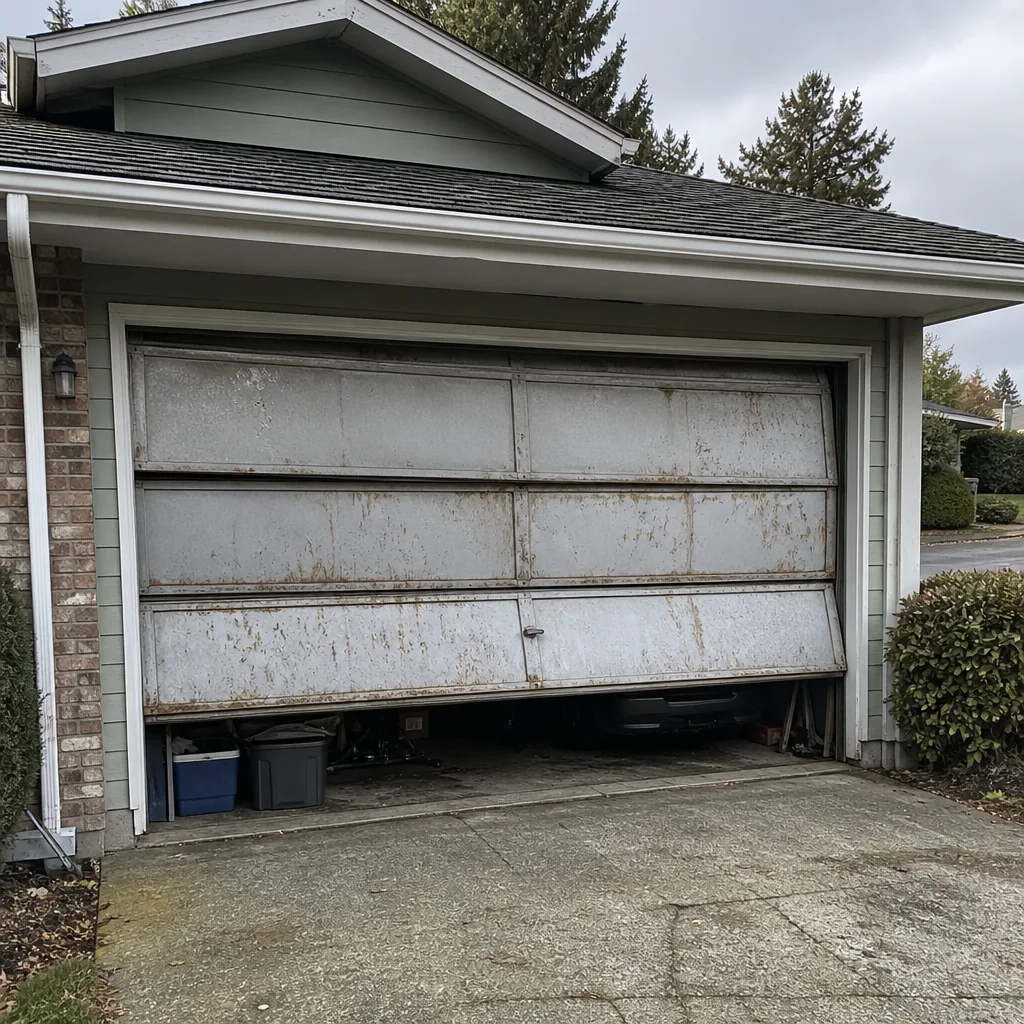 Before
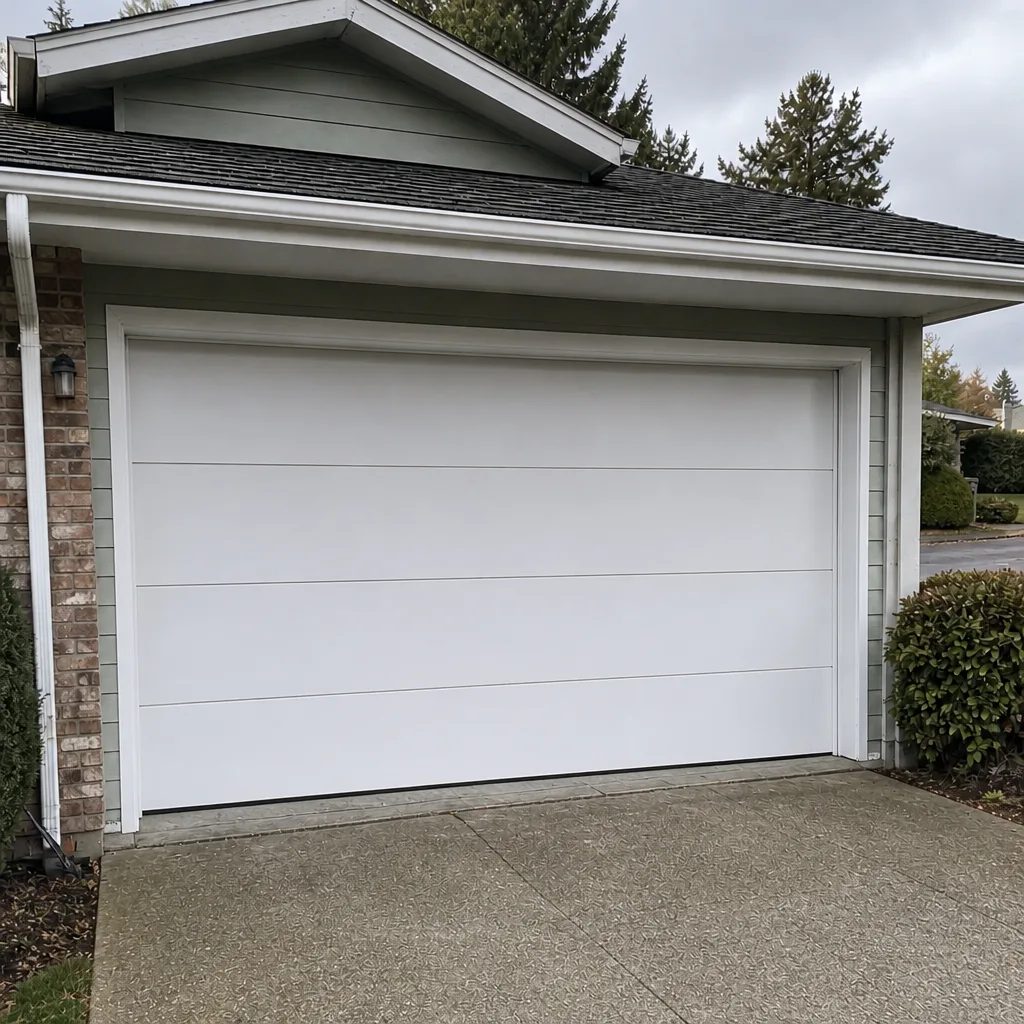 After
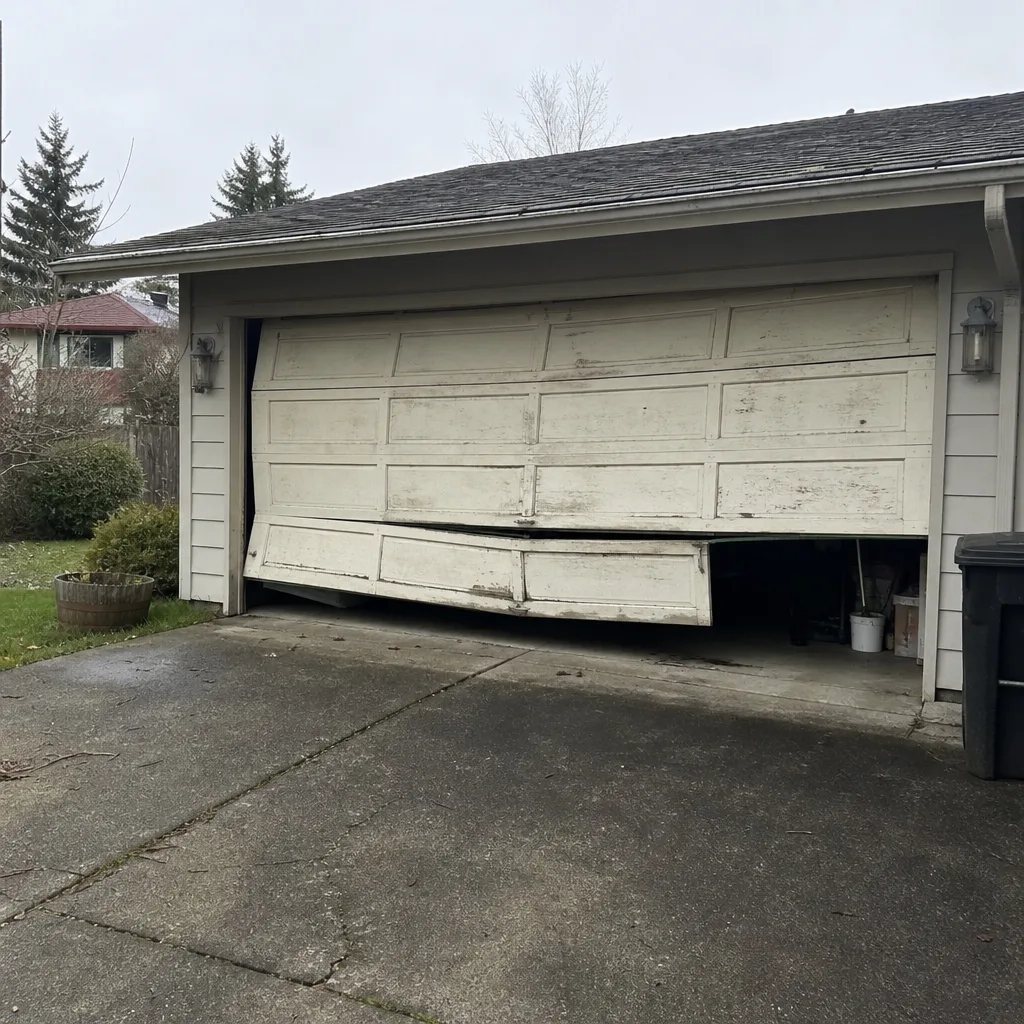 Before
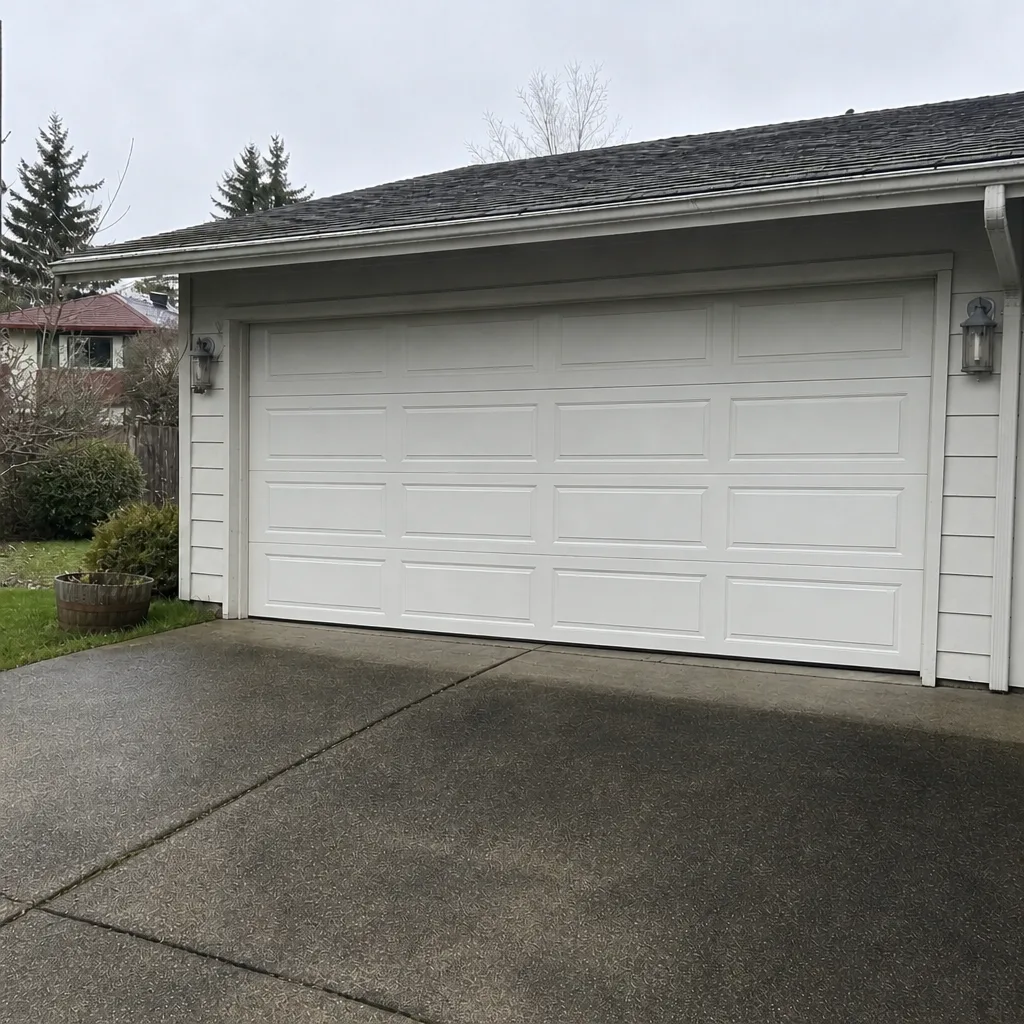 After
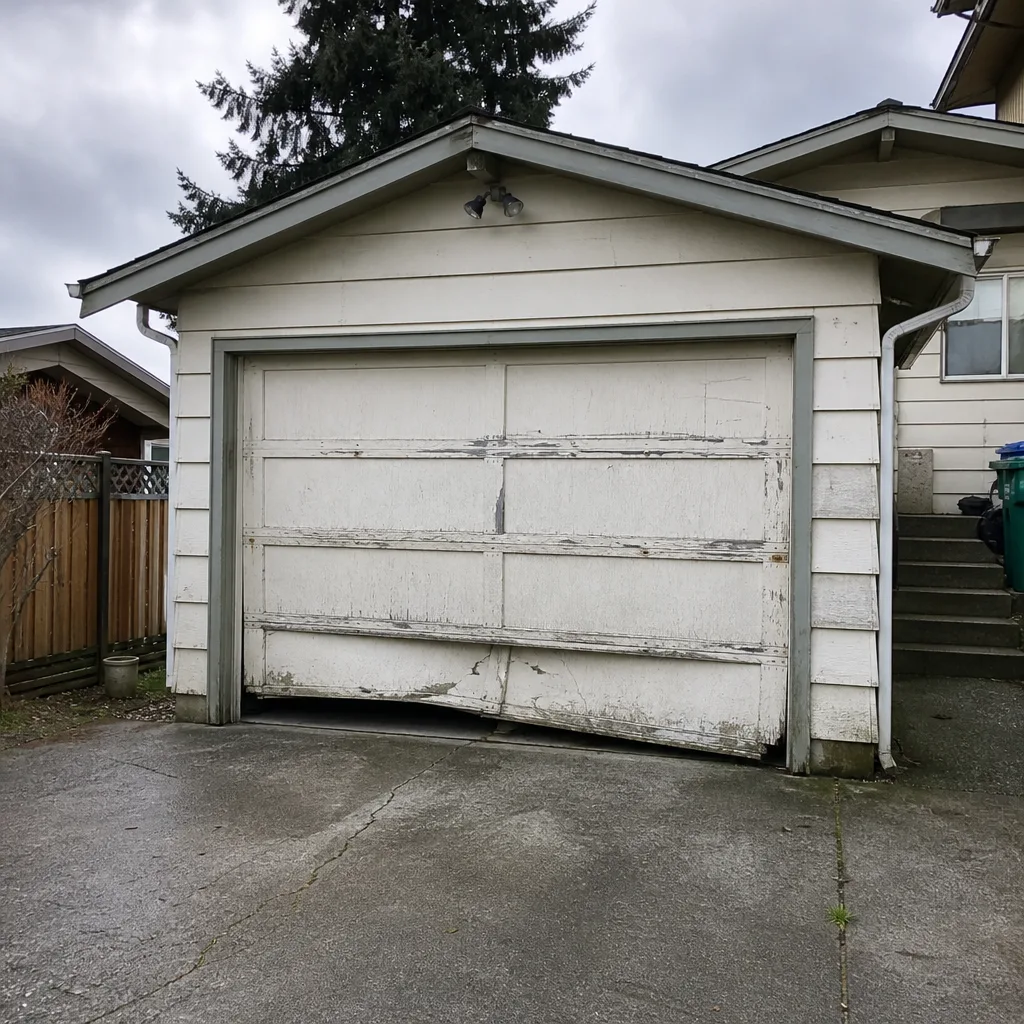 Before
 After
Common Mistakes to Avoid
- Skipping the fall inspection. In Shoreline, the fall window before the rain returns is the most important maintenance window of the year. Miss it and the wet season finds the weak points for you.
- Waiting until the spring breaks to fix a slow door. A door that’s been opening slowly since fall is the one that fails in January. Slow operation is the warning, not the failure.
- Lubricating the tracks. Tracks should be clean and dry. Lubricant attracts grit and makes rollers slide instead of roll, which loads the springs and the opener.
- Greasing the springs. Use a light, oil-free lubricant. Grease traps grit on the coil and can accelerate wear on the exact part you’re trying to protect.
- Trusting a door that closes but doesn’t seal. In this climate, a door that closes but leaves a gap at the bottom is a door that puts water under your floor and into your frame every winter.
- Replacing the door when the springs are the problem. A lot of “replacement” quotes in Shoreline are really spring or opener fixes wearing a bigger invoice. Get a diagnosis first.
- Assuming a newer brand is immune to seasonal stress. We work on Clopay, Amarr, Raynor, and Wayne Dalton doors regularly, and a newer door still needs the same seasonal checks. Brand is a compatibility question, not a maintenance exemption.
Frequently Asked Questions
Once a year, and the best time is early fall, before the wet season starts. A yearly professional tune-up catches the moisture-related wear and hardware issues that matter most here, and a light homeowner inspection in spring and late summer covers the in-between months.
They don’t fail because of the cold. They fail after months of moisture-driven wear finally reaches a stress point, and the first cold morning is just the moment the weakened spring gives way. Monitoring the door’s speed and sound during the wet season is the best warning you’ll get. If a spring does fail, stop using the door and call for professional service. Call (877) 792-6834 for an exact quote, and estimates are free.
Both is what we recommend. A matched pair wears at the same rate, so replacing one leaves you with a new spring working alongside a fatigued one, and the older spring usually fails shortly after. Your written estimate will show the cost for one or both before any work starts.
Inspecting and replacing the bottom seal before the wet season. It’s the cheapest task on the list and the one that prevents the most expensive damage. A failed seal lets water into the track, the frame, and the panel bottom, and that repair is far more costly than the seal itself.
It means we’re trained on your brand, not that we stock its parts on a truck. Our technicians work across LiftMaster, Chamberlain, Genie, Clopay, Amarr, Wayne Dalton, Craftsman, and Raynor. For your specific door, we’ll diagnose the issue on the visit and tell you exactly what’s needed.
Both. Storm damage that affects how the door opens, closes, or seals is a repair call. Cosmetic issues can usually wait. If anything has changed in how the door operates after a storm, stop using the opener and call us.
No. We give you a written estimate, and the price is agreed before any work begins. If the diagnosis changes once we’re on site, we’ll talk to you before touching anything. The estimate you sign is the price you pay.
Yes. The local professionals we connect you with are licensed and insured as their state requires. Our technicians have up to 12 years of experience, which means they’ve seen the same seasonal patterns on the same brands many times.
The Bottom Line
Garage door care in Shoreline isn’t about surviving extreme weather. It’s about managing months of quiet moisture and taking the maintenance window in early fall seriously. The checklist is short: inspect the bottom seal and weatherstripping before the wet season, monitor the springs through the winter, and watch for heat and UV effects in summer. Skip the seasonal checks and the door finds the weak points on its own schedule. Stay with them and most doors in Shoreline reach their natural service life without major surprises. When something is beyond a homeowner check, Shoreline Garage Door Repair Co is built around getting your existing door back in working order.
Call (877) 792-6834 for a free estimate. We’ll walk your door through the seasonal check, tell you what needs attention and when, and quote the price before any work starts.
Written by the team at Shoreline Garage Door Repair Co.