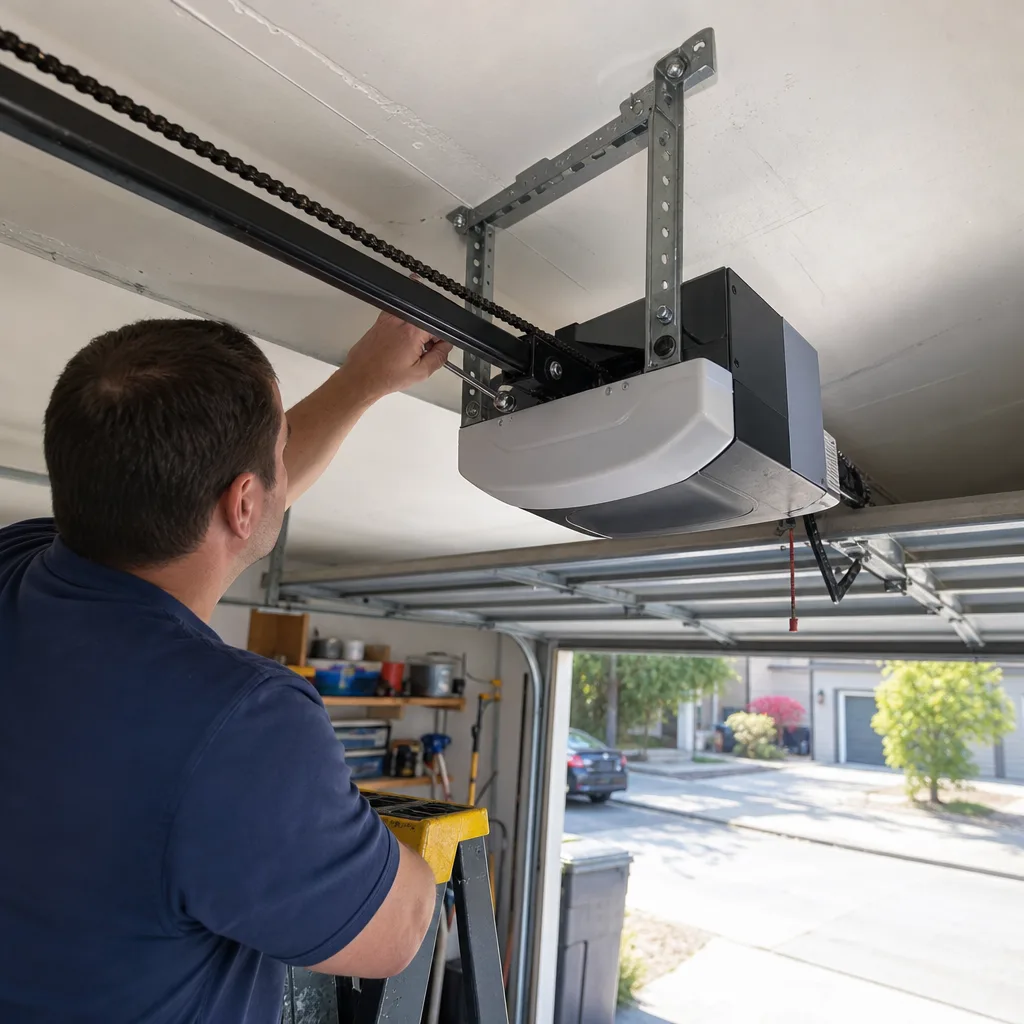
Last updated November 20, 2026
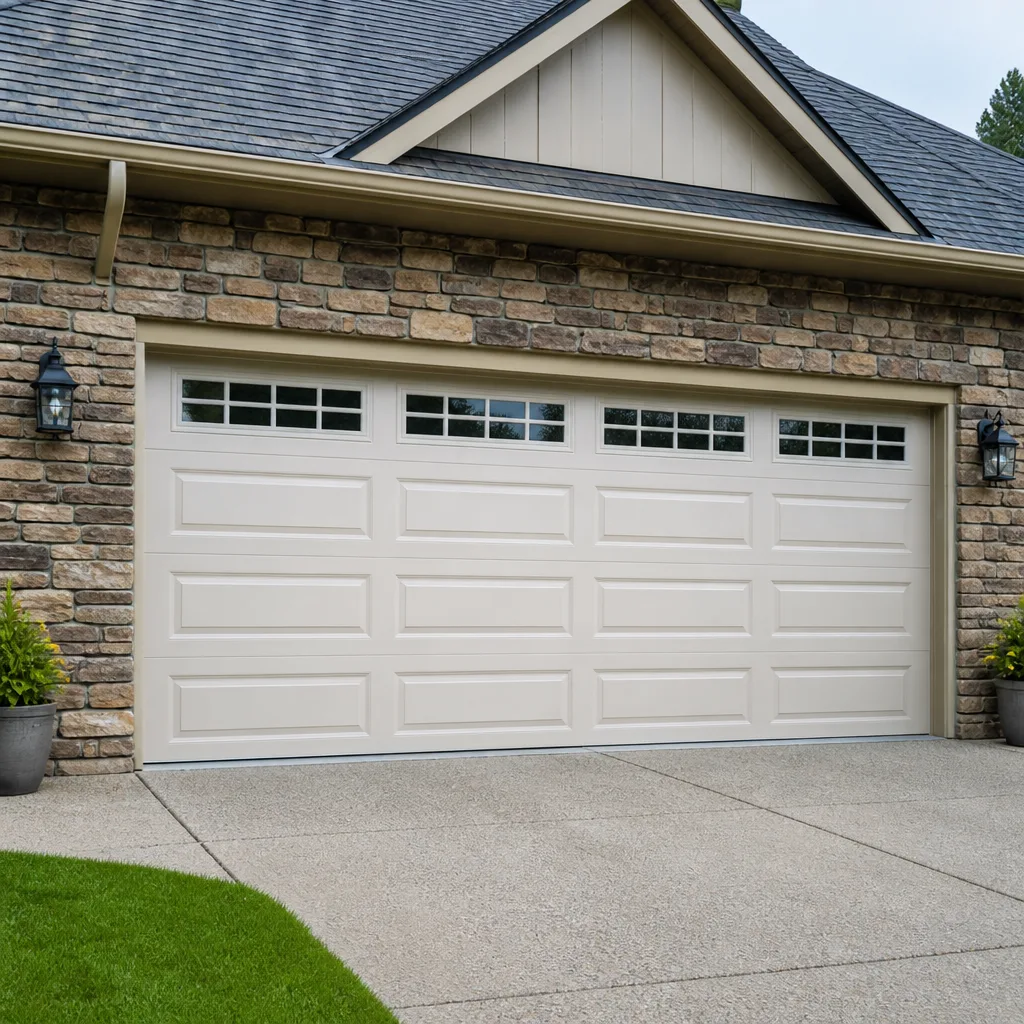 Raised-panel steel
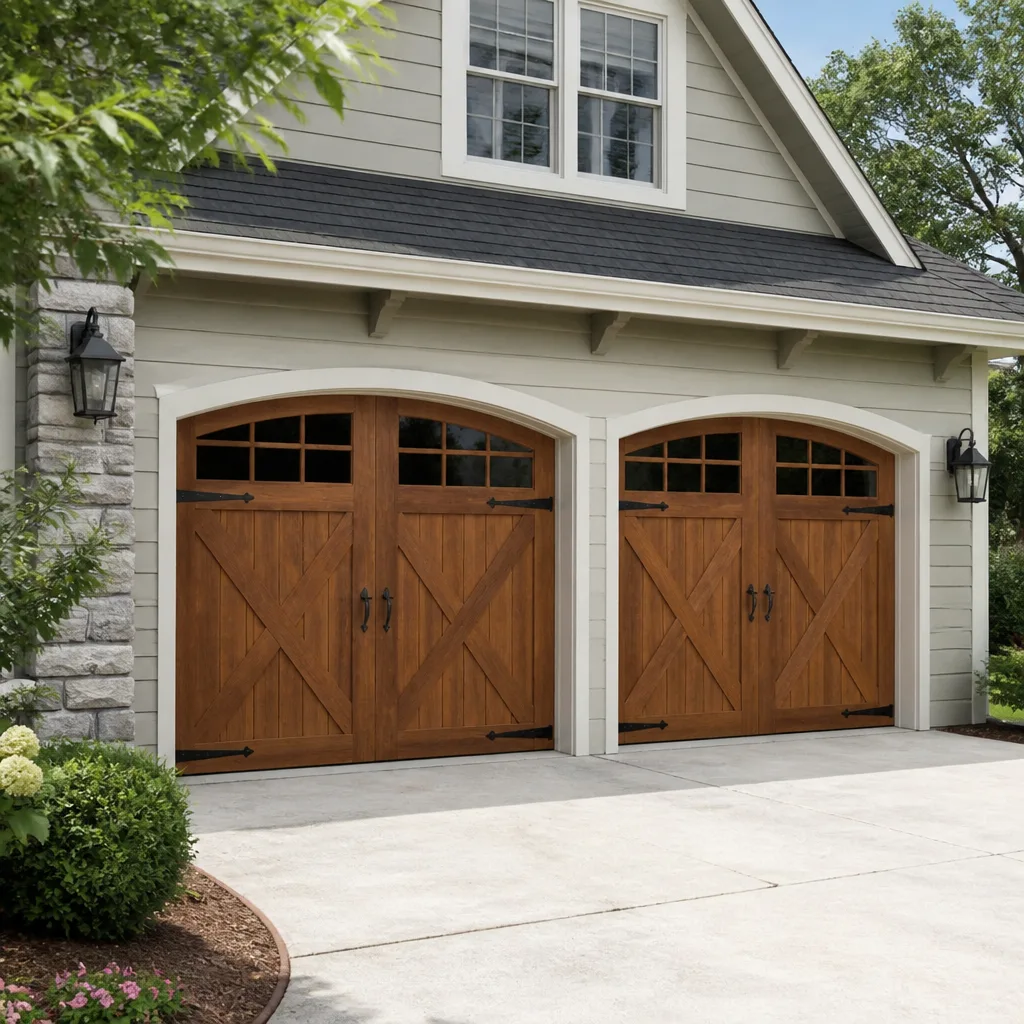 Carriage house
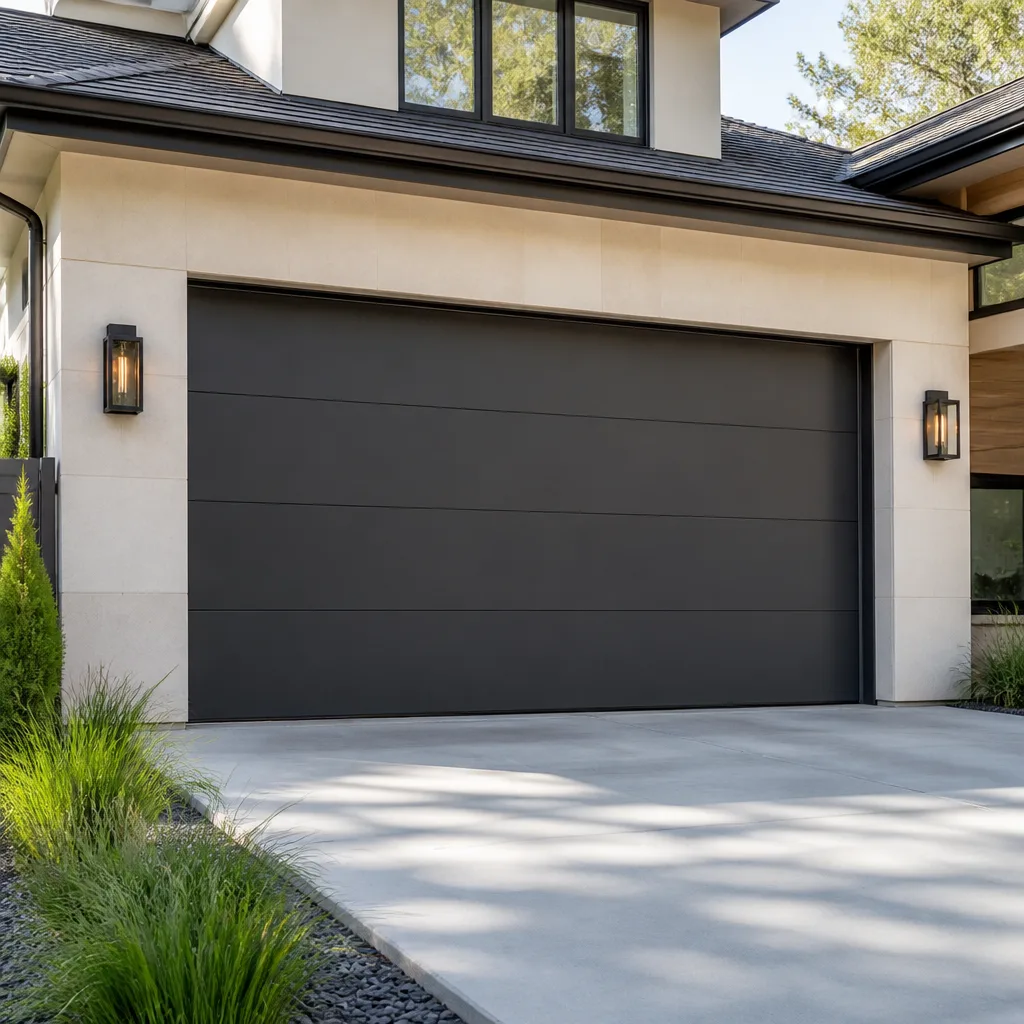 Modern flush
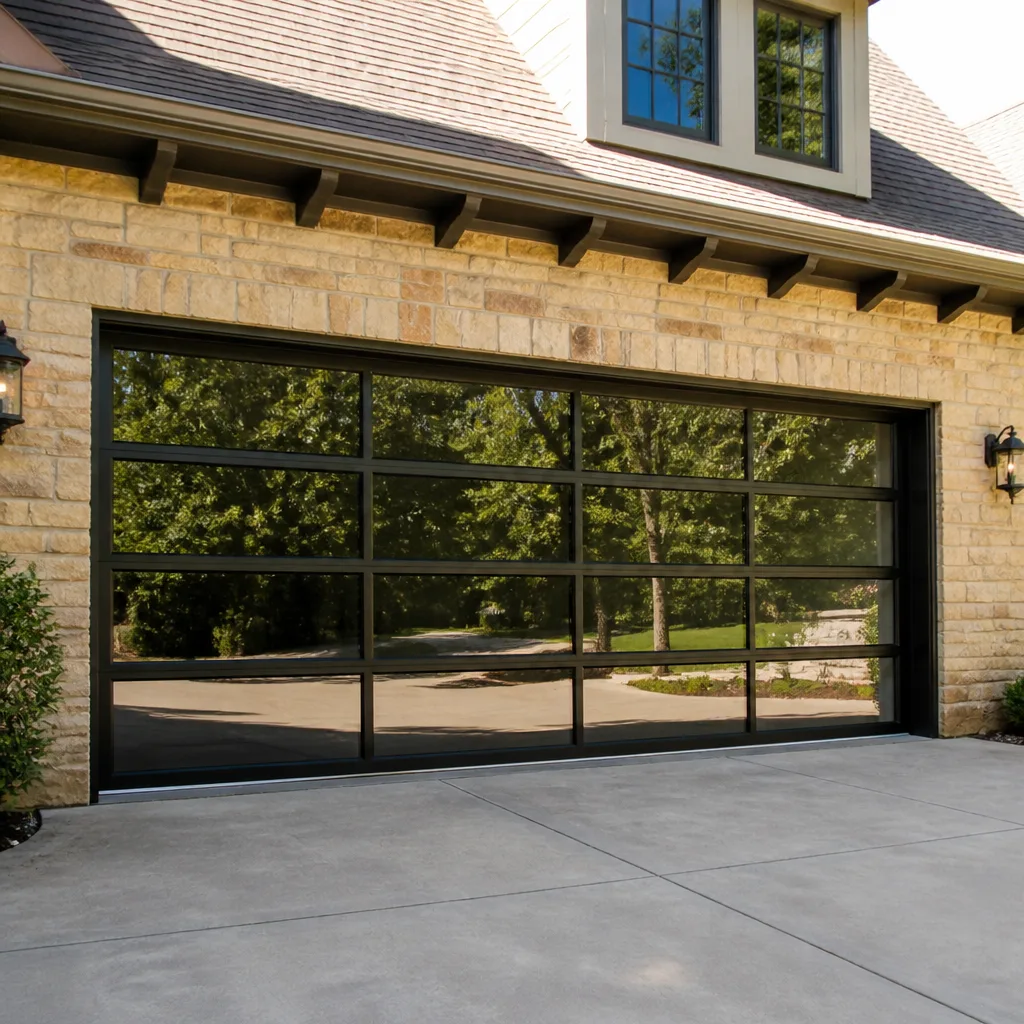 Full-view glass
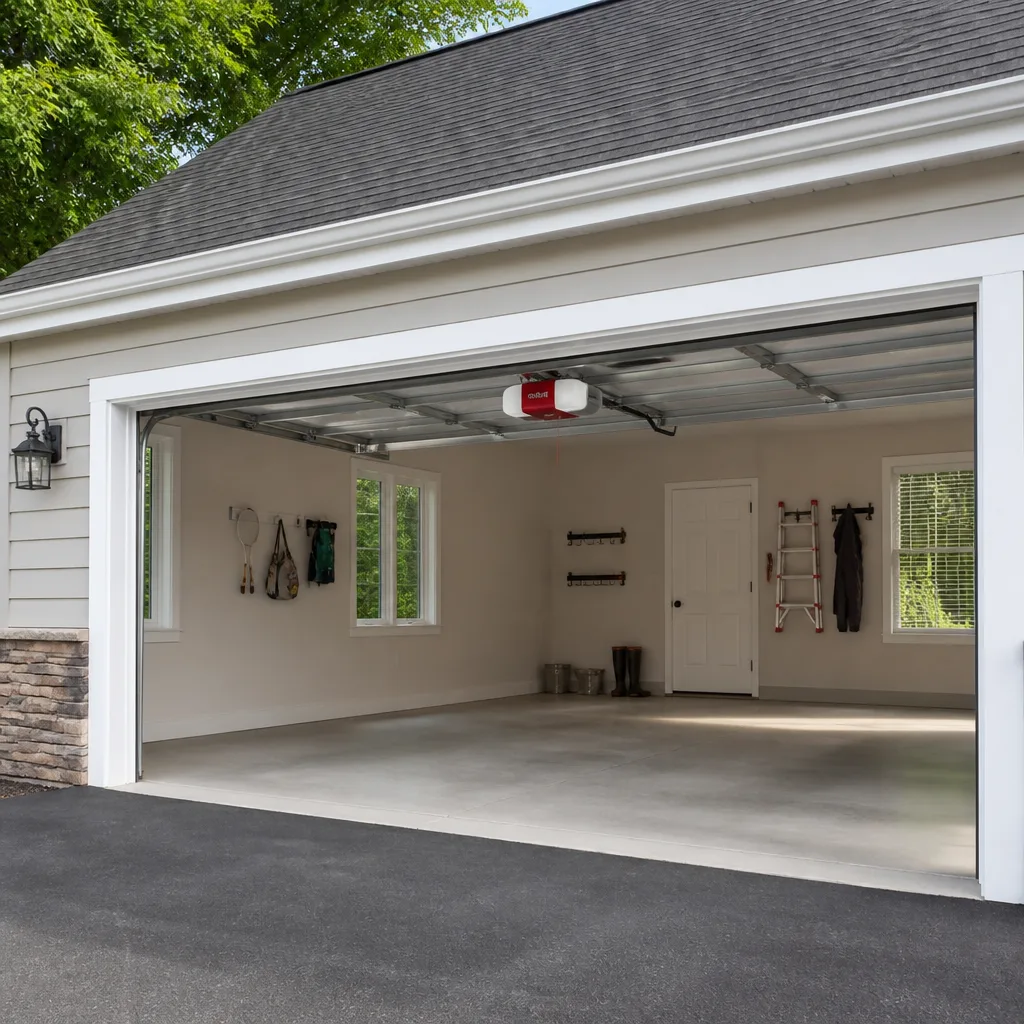 LiftMaster openers
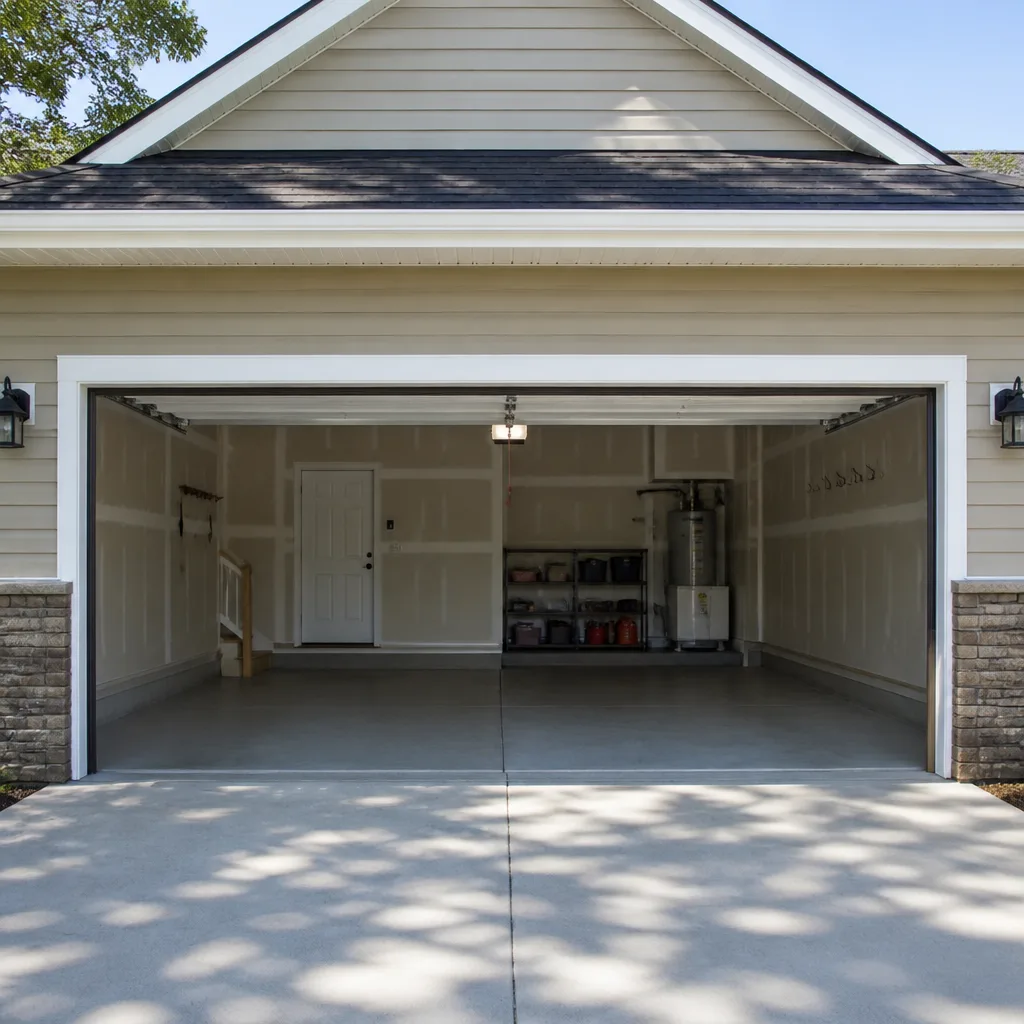 Chamberlain openers
Full 25-point door and opener safety check with every visit - springs, cables, rollers, tracks, and your LiftMaster or Chamberlain opener included
You get a price before we start. It does not change when the pro arrives.
Get your free estimateThe Complete Guide to Garage Doors in Shoreline
Most garage door guides are written for a generic suburb somewhere in the middle of the country. They assume a house built five years ago, a dry climate, and hardware the author has never actually touched. Shoreline isn’t that place. A large share of the city’s housing went up during the boom years from the 1980s through the 2000s, which means thousands of homes here are still running the original springs, tracks, and openers that were installed when the house was framed. Much of that hardware is now twenty to forty years old, and most owners don’t find out until the door stops halfway down on a rainy Tuesday.
This guide is built around what we actually see in Shoreline: the door styles common to each era of construction, the opener models that dominate local driveways, how the wet Pacific Northwest climate treats metal over time, and the repair-versus-replace math that actually makes sense for a homeowner here. You’ll also learn the permitting triggers people routinely miss. By the end you’ll know your own system well enough to make a smart call, whether that’s a repair or a replacement.
Quick Answer
A garage door in Shoreline is a system of six interacting parts: panels, torsion or extension springs, tracks and rollers, hinges, the opener, and the safety sensors. When one fails, the whole door stops. Most problems on older Shoreline doors are repairable, and repair is usually the smarter move unless the panels themselves are structurally rotted or the door is badly out of balance. Understanding what you have is the first step toward fixing it correctly.
Styles & brands we work with
- Raised-panel steel
- Carriage house
- Modern flush
- Full-view glass
- LiftMaster openers
- Chamberlain openers
Table of Contents
- What Shoreline’s Housing Stock Tells You About Your Door
- What a Garage Door System Actually Consists Of
- The Brands That Dominate Shoreline Driveways
- How Puget Sound Weather Wears Down Garage Door Hardware
- Repair or Replace? A Shoreline Decision Framework
- Permitting Triggers Shoreline Homeowners Miss
- A Maintenance Routine That Fits This Climate
- Common Mistakes to Avoid
What Shoreline’s Housing Stock Tells You About Your Door
Shoreline grew up in distinct waves, and the door on your house is a fairly reliable clue to which wave built it. Walk through neighborhoods like Richmond Beach, Echo Lake, Ridgecrest, or Meridian Park and you can often guess a home’s construction era before you see the address. The door style, the opener, and the way the whole system ages all trace back to when the house was framed.
Here’s how the eras break down in our experience:
- Mid-century homes (1950s – 1970s): Often a single wide door, sometimes two single-car doors, frequently with extension springs on the sides. Many have been updated once but still run on the original track layout. These doors are usually wood or early steel.
- 1980s – 1990s construction: The heart of Shoreline’s boom. Steel sectional doors became standard, torsion springs mounted on a shaft above the door, and chain-drive openers were installed by the builder. Many of these openers are the originals.
- 1990s – 2000s construction: Insulated steel doors with a factory finish, belt-drive or screw-drive openers, and safety reversing sensors as a standard feature. Ride quality was a selling point by this era.
- Newer infill and remodels: Often carriage-house style doors with decorative hardware, smart openers, and newer safety features. These are the least common but growing share.
Why does this matter? Because a 1990 steel door with its original torsion spring is a very different repair than a 1965 wood door with extension springs. The parts, the labor, and the likely failure points all differ. When you call for service in Shoreline, knowing roughly which era your home belongs to helps the conversation go faster. And if you’re buying a house here, a door inspection is one of the cheapest ways to spot deferred maintenance before it becomes your problem.
What a Garage Door System Actually Consists Of
A garage door looks like one object but works as a chain of parts, each dependent on the others. When something goes wrong, the visible symptom is often not where the actual problem lives. A door that reverses on its own might be a sensor, a track issue, or a spring losing tension. Here’s what we look at, in order:
- Panels and sections. The door face itself. Each section is hinged to the next. Damage here is usually visible: dents, cracks, rot, or a panel that’s come out of alignment.
- Springs. The counterweight that makes a heavy door feel light. Torsion springs sit on a shaft above the door; extension springs run along the sides. This is the most dangerous part of the system and the one that fails most dramatically.
- Tracks and rollers. The guide rails that keep the door moving in a straight line, and the rollers that ride inside them. Bent tracks and worn rollers cause grinding, binding, and uneven travel.
- Hinges and hardware. The joints between sections, plus the brackets and fasteners that hold everything together. Loose or worn hinges cause sagging and noise.
- The opener. The motor that lifts the door, plus the rail, trolley, and drive mechanism. Openers are rated for a certain door weight and should be matched to it.
- Safety sensors and reversing mechanism. The photo-eye sensors near the floor, and the force-setting that makes the door reverse on contact. Required on all openers installed in recent decades and a genuine safety feature.
The interaction is what trips people up. A spring that’s lost tension forces the opener to work harder, which can burn out the motor. A bent track causes the door to bind, which stresses the hinges. A failing sensor makes the door reverse for no obvious reason. Fixing the symptom without understanding the cause is how a small repair turns into a replacement. That’s why we diagnose the whole system, not just the part that’s complaining.
The Brands That Dominate Shoreline Driveways
Brand matters in this trade. A technician who knows the hardware in front of them isn’t guessing, and guessing is expensive when the part in question is a torsion spring under tension. We work on the brand you already own, which is why our team is trained across eight of the most common residential brands: LiftMaster, Chamberlain, Genie, Clopay, Amarr, Wayne Dalton, Craftsman, and Raynor.
In Shoreline, a few of these show up more than others. Clopay and Amarr doors are extremely common on the 1990s and 2000s construction in neighborhoods like Ridgecrest and Meridian Park, where builders chose reliable mid-range steel doors. LiftMaster and Chamberlain openers dominate the driveways that came with those homes, since the same builders frequently installed matching drive systems. Genie openers are common on older homes and on doors that have been upgraded in place. Craftsman openers, sold through Sears, appear throughout the mid-century and 1980s stock. When you call us, telling us the brand cuts down diagnosis time, whether it’s a garage door opener repair or a door that’s simply out of balance.
Local dealer availability matters too. Parts for the brands above are widely stocked in the Seattle metro, which means a repair can usually be completed without a long wait on a special order. Less common European or specialty brands can be a different story. If you’re not sure what you have, the brand is usually stamped on the opener housing and often printed on a label on the door panels.
How Puget Sound Weather Wears Down Garage Door Hardware
The Pacific Northwest is gentle on some things and hard on others. Shoreline doesn’t get the freeze-thaw extremes of the Midwest or the sun exposure of the Southwest, but it does get months of rain, high humidity, and cool temperatures that keep moisture present on metal. What that means for your garage door is specific and predictable.
- Rust on steel doors and hardware. Painted steel doors hold up well if the finish is intact, but any scratch, chip, or ding exposes bare metal to moisture. Rust tends to start at the bottom panel, where splashing and road spray collect, and along hinges and fasteners. Once rust gets under the paint, it spreads.
- Track and roller wear. Humidity doesn’t bend steel, but it does contribute to surface corrosion on rollers, and corroded rollers grind against the track. Combined with normal wear, that accelerates the whole moving assembly.
- Wood door swelling. Older wood doors absorb moisture in the wet season and can swell, warp, or delaminate. A door that sticks in winter and frees up in summer is telling you something.
- Lubrication loss. Cold, wet conditions thin out lubricant on springs, hinges, and rollers faster than dry climates. Parts that aren’t lubricated wear and fail sooner.
- Moss and debris in tracks. Rain-driven debris and the occasional bit of moss can collect in the track channel and cause binding. It’s a simple fix if you catch it early.
None of this means your door is doomed. It means the maintenance calendar here is different from a dry climate. A quick seasonal check on the bottom panel, the rollers, and the springs goes a long way. And when you do see rust or wear, addressing it early is almost always cheaper than waiting. Our technicians have up to 12 years of experience reading exactly this kind of wear, and it’s a big part of why we treat garage door spring repair as its own specialty rather than an afterthought.
Repair or Replace? A Shoreline Decision Framework
This is the question we hear most, and the answer isn’t always the obvious one. The repair-first philosophy we work by means a door that can be fixed should be fixed. But there are real situations where replacement is the smarter financial call. Here’s how to think it through.
Repair usually makes sense when:
- The door panels are structurally sound, with only surface wear or minor dents.
- A single component has failed: one spring, a worn roller, a bent track, an opener problem.
- The door is out of balance or noisy, but the panels and frame are fine.
- The hardware is older but the door still fits its opening and seals properly.
Replacement usually makes sense when:
- Multiple panels are rotted, cracked through, or badly rusted.
- The door has been hit and the frame or track is severely deformed.
- You’re facing a cascade of failures on a door that’s already at the end of its useful life.
- The door has become a genuine safety concern and repair can’t restore safe operation.
One practical note for Shoreline homeowners: if a repair is straightforward, the cost of fixing usually comes in well below the cost of a new door, and the repair keeps the door you already know. We show up to fix it, not sell you something new. Get a written estimate, ask what happens to the price if more is found once the door is opened up, and make sure the price is agreed before any work starts. That protects you whether you repair or replace. If you decide to go the repair route, start with garage door repair and get a clear diagnosis first.
Permitting Triggers Shoreline Homeowners Miss
Permits for garage door work are one of those things people assume don’t apply to them. Sometimes they’re right. Sometimes they’re not, and the surprise comes later. We’re not the building department and we won’t pretend to know every local rule, but we can tell you where the lines usually fall and what to ask.
Straight repair, like replacing a spring, a roller, a hinge, or an opener, generally doesn’t require a permit. This is maintenance and restoration of existing hardware, and it’s the most common work we do.
Replacing a door with a like-for-like door often doesn’t require a permit either, but it depends on the specific situation and the jurisdiction. A door of the same size and type in the same opening is usually treated as a replacement.
Structural changes are where permits become relevant. Enlarging the opening, changing the header, moving the door, or changing the door’s type in a way that affects the structure are the kinds of projects that typically trigger a permit. Adding a door where there wasn’t one almost certainly does.
Electrical work on opener wiring, especially new circuits or outlets, is usually a separate question from the door itself, and electrical work in most jurisdictions has its own permit rules.
The safest approach for any Shoreline homeowner is simple: before a bigger job, call the city’s building department and describe exactly what’s being done. Ask whether a permit is required, and if it is, who pulls it and what the inspection involves. It takes five minutes and prevents the kind of surprise that shows up at resale. A good repair company will tell you honestly when a job crosses into permit territory. If someone tells you a structural change never needs a permit, get a second opinion.
A Maintenance Routine That Fits This Climate
Garage doors aren’t high-maintenance, but they do respond to a little attention. In a wet climate like Shoreline’s, a few simple habits extend the life of the whole system and catch small problems before they become expensive ones. You can do most of this yourself safely; the one thing you should never touch is the springs.
A sensible routine, a few times a year:
- Look at the bottom panel. Check for rust, chipping paint, and standing moisture. Touch up bare metal promptly to keep rust from spreading.
- Listen to the door. A grinding, squeaking, or popping sound is telling you something. Note when it happens (opening, closing, or throughout) and mention it when you call.
- Watch the travel. The door should move smoothly and evenly, and sit level when closed. A door that jerks, binds, or hangs on one side is out of balance.
- Test the safety reverse. With the door open, place an object in the path and confirm the door reverses. Check the photo-eye sensors are aligned and clear of debris.
- Lubricate the moving parts. Hinges, rollers, and the track can be lubricated with a proper garage door lubricant. Do not lubricate the springs if you’re unsure of the type; leave that to a technician.
- Keep the track clear. Clear debris, leaves, and moss from the track channels, and check the rollers are seated properly.
- Watch for spring symptoms. A door that suddenly feels much heavier, or a visible gap in a torsion spring, means stop using the door and call a professional.
That’s it. Fifteen minutes a few times a year is enough to catch most of the problems we see in Shoreline before they turn into an emergency repair. If a check turns up something you’re not sure about, that’s the right moment to get it looked at rather than wait for the door to fail.
See the difference
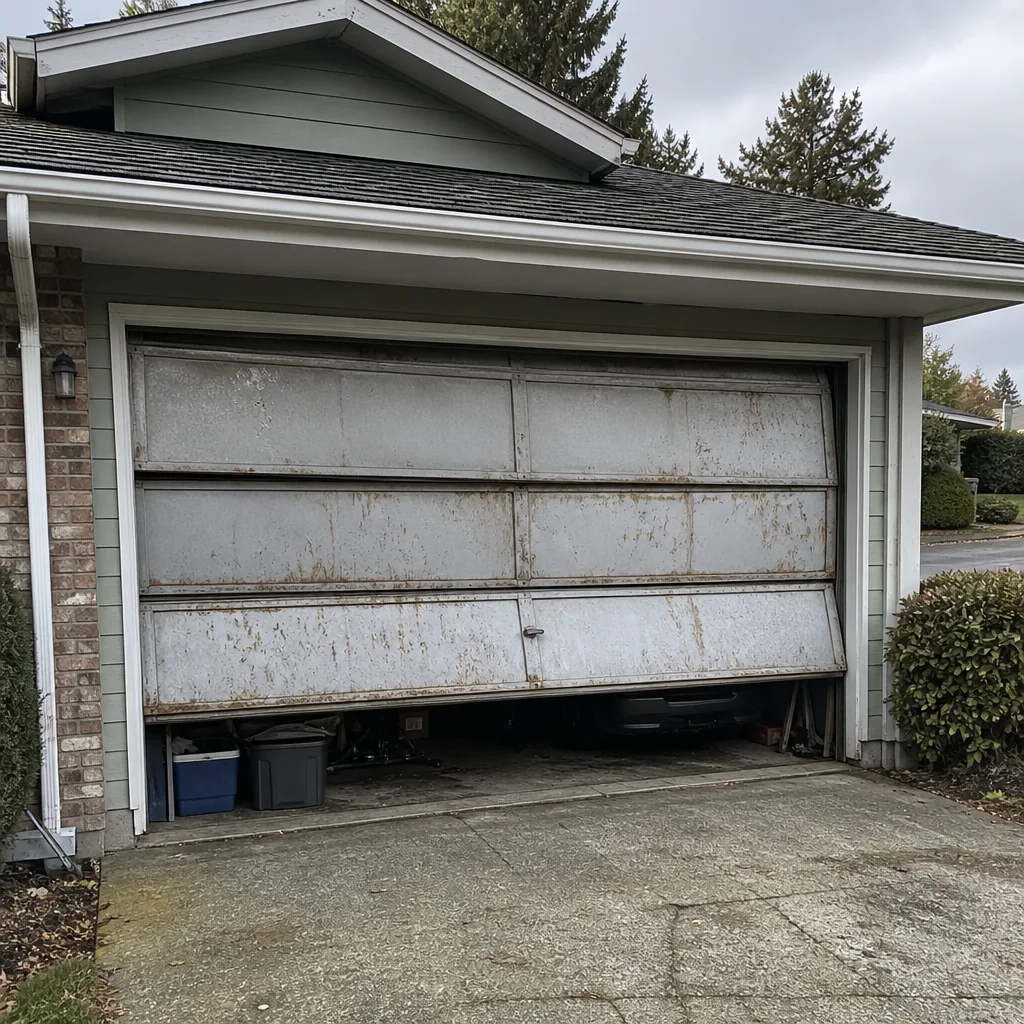 Before
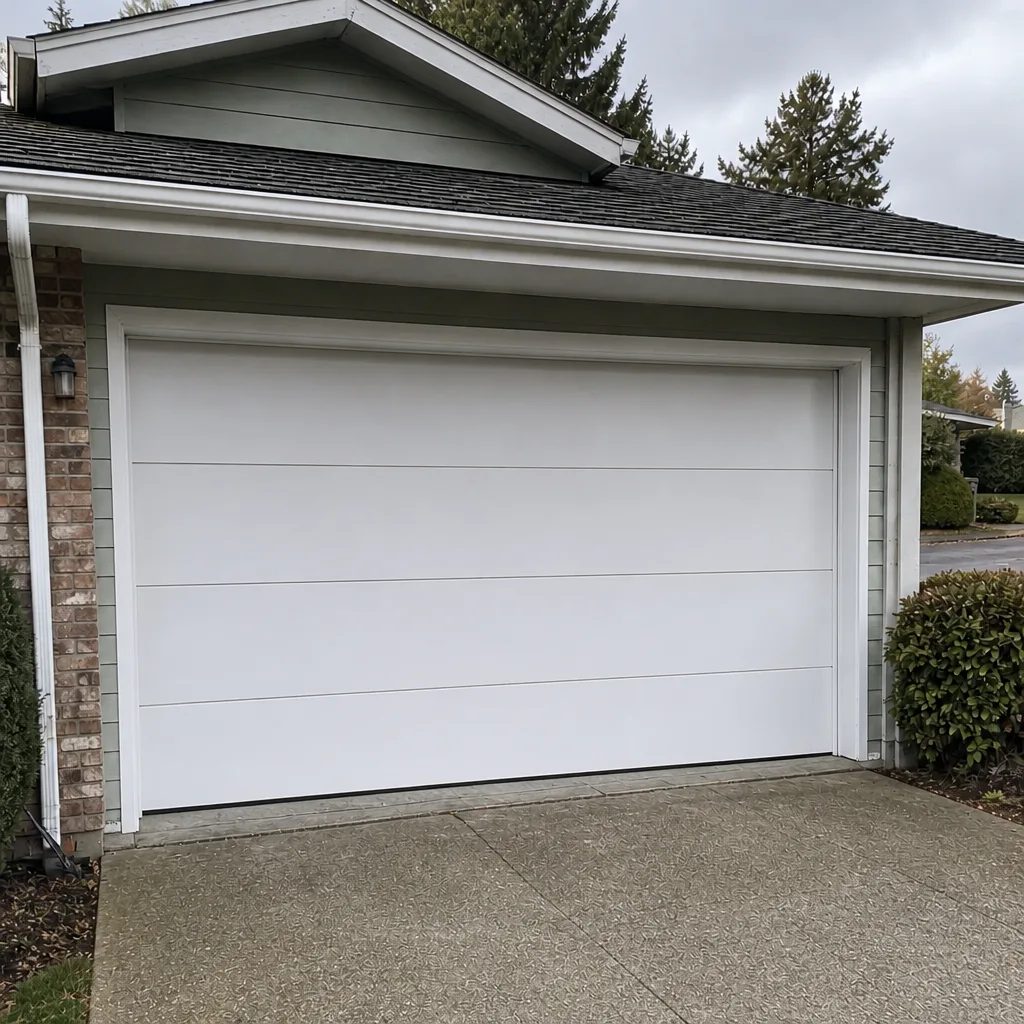 After
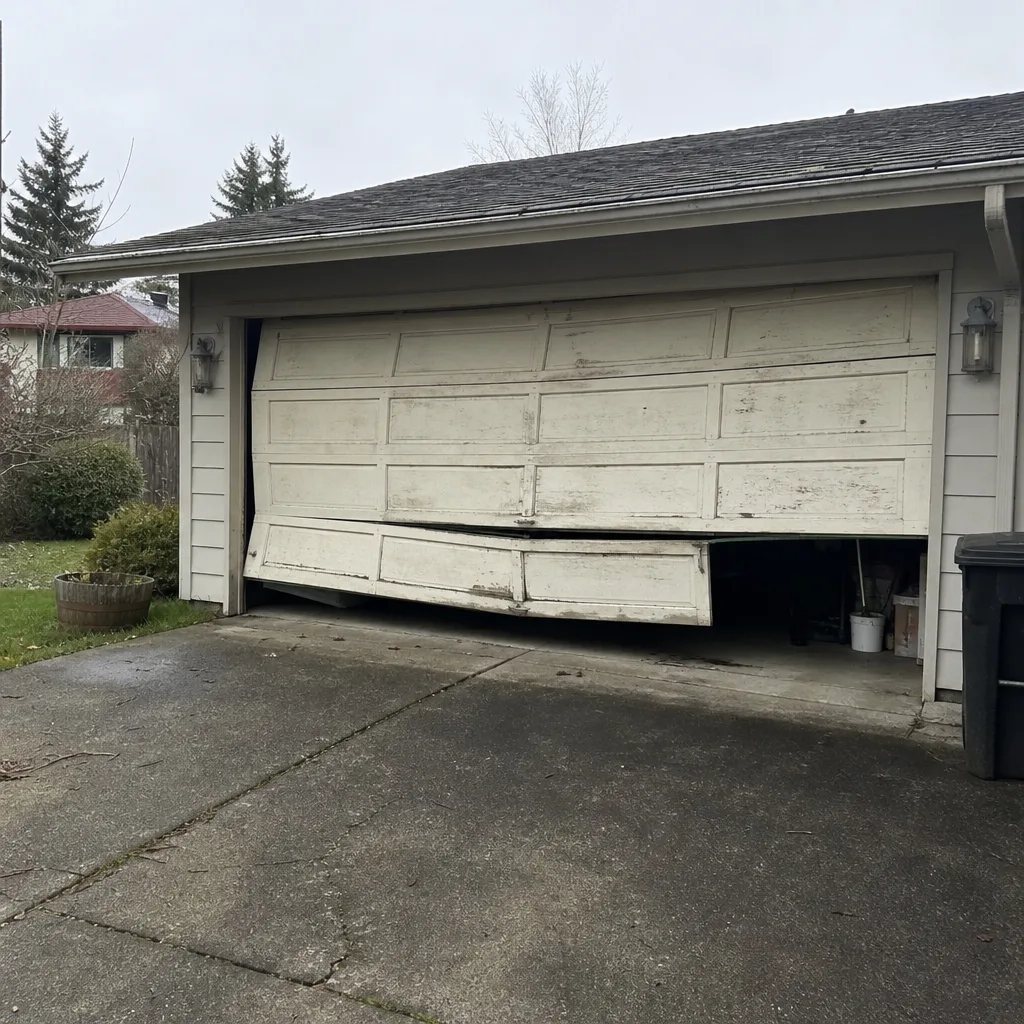 Before
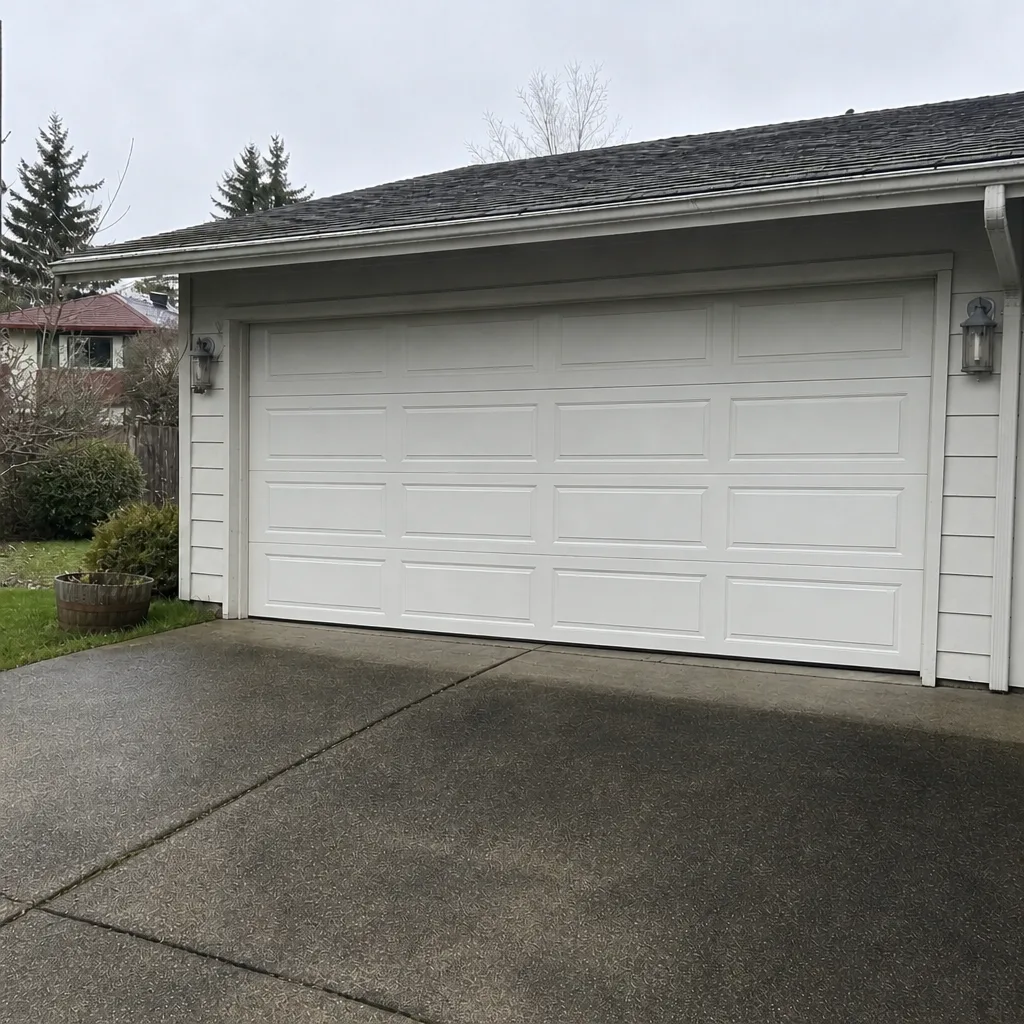 After
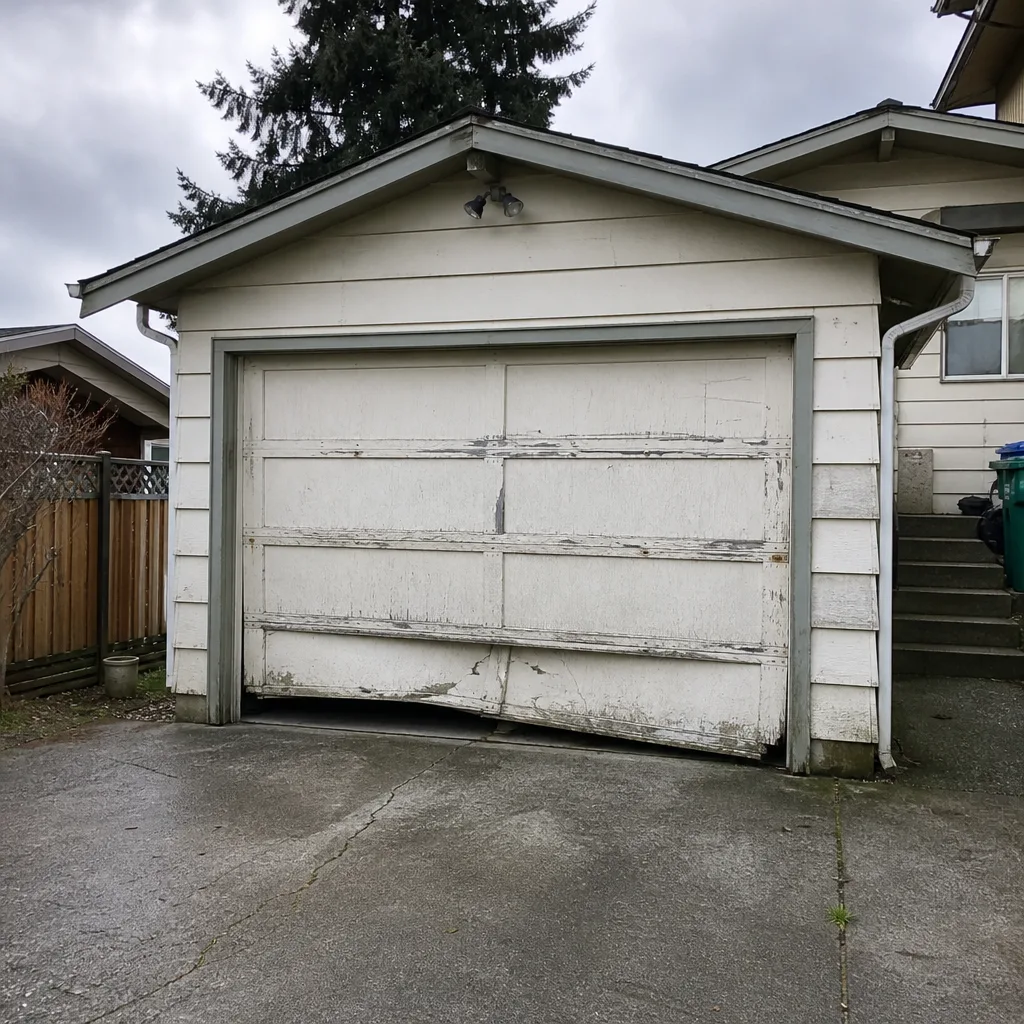 Before
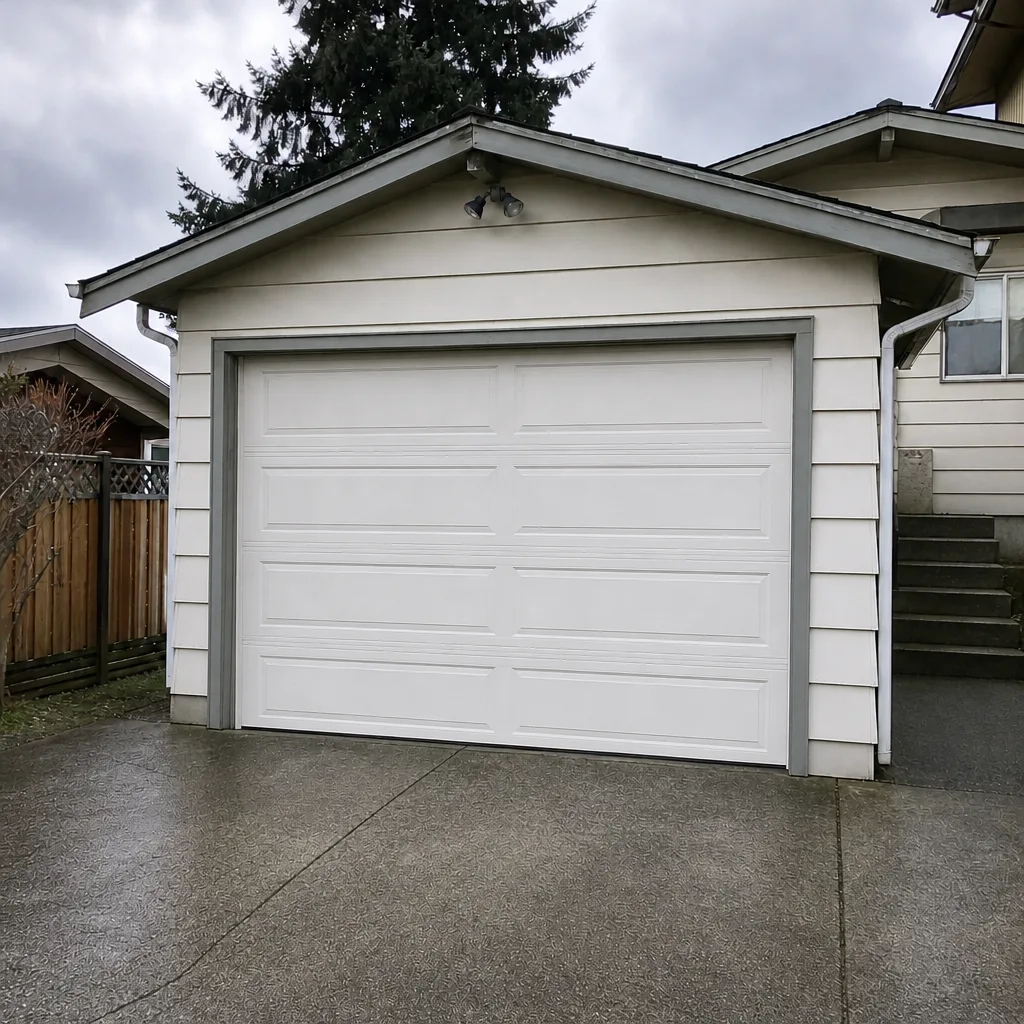 After
Common Mistakes to Avoid
Some of the mistakes we see around Shoreline are universal, and some are specific to the housing and climate here. Here are the ones that matter most.
- Assuming an older door means a replacement. Many 1980s and 1990s doors in Shoreline are still perfectly serviceable and just need repair. Replacing a solid door because it’s noisy or stiff is often unnecessary spending.
- Ignoring spring symptoms because the door still moves. A door that’s getting heavier or noisier is telling you a spring is losing tension. Using it until it fails risks damaging the opener and, worse, puts you at risk. Springs are the most dangerous part of the system, and they need a trained professional.
- Letting rust spread on the bottom panel. The wet season is hard on the lower door, and small chips become large rust patches fast if they’re not addressed. A touch-up now prevents a panel replacement later.
- Skipping the permit question on a bigger job. Homeowners often assume door work never needs a permit. For structural changes, that assumption can be costly at resale. Call the city’s building department before a major project and ask directly.
- Calling a generalist for a specialist job. Garage doors have their own hardware, their own failure modes, and their own safety risks. A handyman who works on ten different trades is not the same as a technician who works on doors and openers every day.
- Accepting a quote without a breakdown. An estimate that doesn’t separate parts from labor, or that leaves the possibility of a much bigger bill open, is a red flag. The price you agree to before work starts should be the price you pay.
- Not matching the opener to the door. A new opener squeezed onto a heavier or stiffer door will strain and fail early. The system has to be matched, and a specialist knows how.
When to Call a Professional
Some garage door issues are DIY-friendly, and some genuinely aren’t. Call a professional for anything involving springs, cables, or the high-tension hardware above the door. That’s not a suggestion; springs are the most dangerous part of the system, and mishandling them can cause serious injury. Call us if the door won’t open or close, if it reverses on its own, if it’s badly out of balance, if the opener runs but the door doesn’t move, or if you’re seeing rust, cracks, or structural damage that worries you. If a car has bumped the door, or if the door has come off its track, that’s also a call. A clear diagnosis is the fastest path back to a working door.
Shoreline Garage Door Repair Co offers free estimates in Shoreline. Call (877) 792-6834 and describe what the door is doing. We’ll tell you what we think and give you a price before any work starts.
Frequently Asked Questions
Garage door repair costs in Shoreline depend on the part and the diagnosis, and we give a written estimate before work starts. A single spring repair, a roller or hinge replacement, or an opener fix each carry different material and labor costs. Some jobs are quick and inexpensive; others involve more of the system. We don’t publish a flat price because every door is different, but we can tell you the number up front. Call (877) 792-6834 for a free estimate.
Availability depends on the day and the job. Some repairs can be scheduled quickly, while others need a specific part or a longer visit. The fastest way to find out is to call (877) 792-6834 and tell us what’s happening. We’ll give you an honest answer about timing and a clear price before any work begins.
Repair is usually the better call if the panels are structurally sound and a single component has failed. Replacement makes more sense when multiple panels are rotted or badly damaged, or the door is beyond safe repair. In our experience, many older Shoreline doors are still worth fixing. Get a diagnosis and a written quote, and decide with the numbers in front of you.
The clearest signs are a door that suddenly feels much heavier to lift by hand, a gap in a torsion spring, or the opener straining to lift the door. If you see any of these, stop using the door and call a professional. Springs are under high tension, so this is not a repair to attempt yourself.
We work on the brand you already own. Our technicians are trained across LiftMaster, Chamberlain, Genie, Clopay, Amarr, Wayne Dalton, Craftsman, and Raynor. Those eight cover most of what we see in Shoreline. If you’re not sure which brand your door or opener is, check the opener housing or the door’s label, and mention it when you call.
Shoreline’s wet, humid weather keeps moisture on metal for long stretches, and rust tends to start where the paint is chipped or scuffed, usually on the bottom panel. Road splash, poor drainage, and untreated scratches accelerate it. Touching up bare metal promptly slows the spread, and a technician can tell you whether the rust is cosmetic or has reached the structural panels.
The Bottom Line
A garage door in Shoreline is a system, and the best decisions come from understanding the whole thing: the era your door was built in, the brand hardware behind it, how the wet climate treats the parts, and whether a repair can bring it back to working order. Most Shoreline doors are repairable, and repair-first is usually the smart move. When springs, cables, or high-tension hardware are involved, call a specialist. Get a written estimate, confirm the price before work starts, and ask about permits for any bigger change. Know what you own, and the decision gets a lot easier.
Whether you need a quick diagnosis or a full repair estimate in Shoreline, our team at Shoreline Garage Door Repair Co is here to help. Call (877) 792-6834 for a free estimate and get your door back in working order.
Written by the team at Shoreline Garage Door Repair Co.